Developed Countries

According to BCA Research’s Foreign Exchange Strategy service, the domestic economy does not really explain the recent weakness in the Norwegian krone. Some of this weakness can be attributed to structural and idiosyncratic factors, one being persistent…
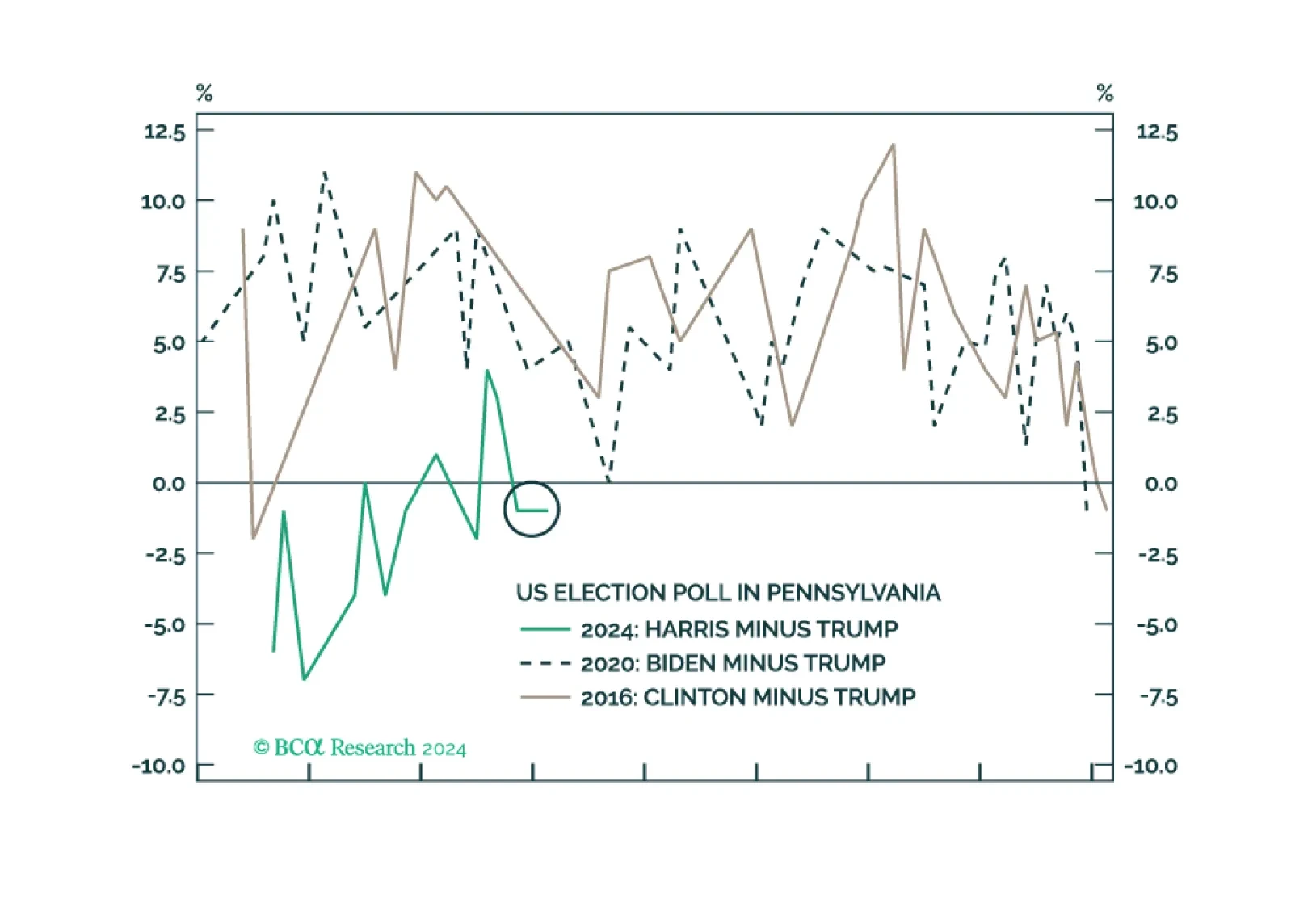
Investors should buy protection against further volatility. The shakeup in early August was a taste of things to come. The US election is a pivotal moment in modern history that will drive up uncertainty, while other countries take advantage of US division and distraction.
Canadian headline CPI decelerated from 2.7% y/y to 2.5% in July, the slowest pace in over 3 years. Notably, core median and trimmed-mean CPI eased further than expected, to 2.4% and 2.7% y/y respectively, 0.1 ppt below anticipations. Lower prices for…
In a widely expected move, the Riksbank lowered its policy rate from 3.75% to 3.5% in August. It had kept rates on hold in June, after having led many other major DM central banks in easing policy in May. The Riksbank also signaled it could cut as many as…
It didn't take long for markets to utterly shrug off the surprise rise in July's unemployment rate. On Tuesday, the S&P 500 closed higher than it was the day before the July Employment Situation report was released. The Russell 2000 gained 5.2% since…
According to BCA Research’s US Investment Strategy and US Bond Strategy services, the drivers of the structural downtrend in real interest rates include: demographic trends (declining fertility rates, longer life expectancy and a rising dependency…
Markets have recouped some of the losses incurred in the aftermath of the July US Employment Situation report. Was the surprise rise in the unemployment rate a false alarm? Supply-side dynamics alone cannot explain the overall rise in the unemployment…
The Conference Board’s US Leading Economic Index (LEI) disappointed in July, contracting 0.6% m/m from a 0.2% decline in June, below expectations of -0.4%. Meanwhile, the Coincident Economic Index (CEI) was flat. Year-on-year contractions in the LEI have…
The ZEW survey of Eurozone business expectations decreased by a whopping 25.8 points to 17.9 in August. Notably, expectations for Germany’s current situation disappointed, worsening from an already depressed -68.9 level to -77.3, and expectations of future…
EM equities have dramatically underperformed their US and Eurozone peers in USD terms over the past 15 years. The inability of EM and EM Asia companies to grow their EPS largely explains EM equities “lost decade” (and a half). Since 2010, US EPS have grown…