
Sorry, you need to enable JavaScript to visit this website.
Skip to main content

Money/Credit/Debt

Consumer credit growth disappointed in June. Total credit outstanding rose by USD 8.9 billion, in June, lower than May's USD 13.9 billion, and shy of expectations of USD 10 billion. Revolving credit (which includes credit cards) declined USD 1.7 billion in…
The BoJ delivered a surprise rate hike last week, then proceeded to sending a more dovish signal on Wednesday. Deputy Governor Shinichi Uchida strongly hinted at a central bank that would refrain from hiking further in times of market instability. The yen,…
According to BCA Research’s GeoMacro Strategy service, the reason that the bears have been wrong for the past 18 months is that consumers have defied the expectations of most learned economists. As our colleagues posited in late 2023, US consumers would not…

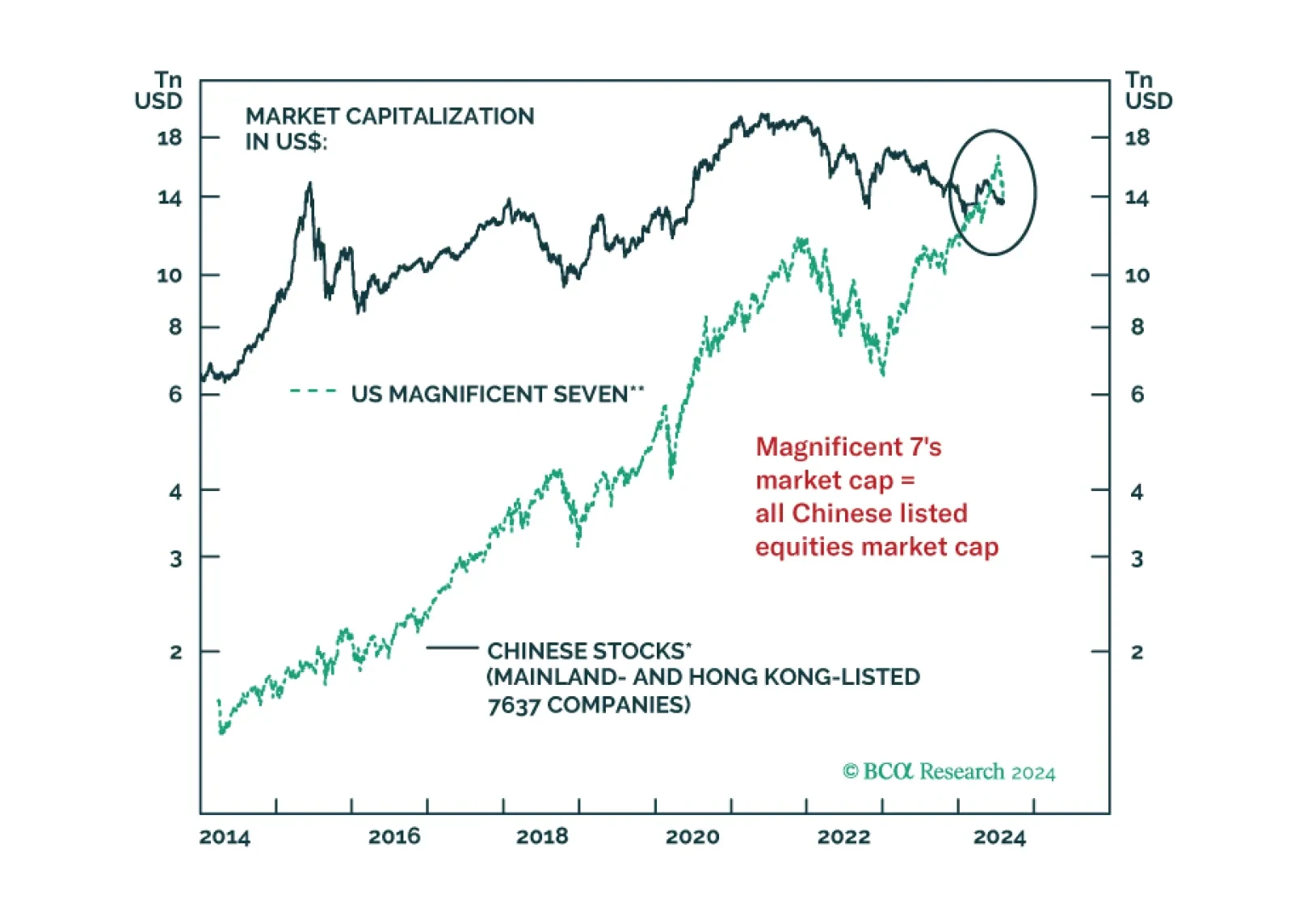
The prices of multiple financial assets have failed to break above their technical resistances. When this occurs, a breakdown ensues. In brief, global risk assets remain vulnerable. We are upgrading Chinese onshore stocks from neutral to overweight and offshore ones from underweight to neutral within EM and global equity portfolios.
US economic news has stolen the spotlight in the past several days but economic developments in the rest of the world have also been uninspiring. The JPM Global Manufacturing PMI dipped into contraction territory in July, deteriorating from 50.8 to 49.7…
The ISM services PMI surprised positively in July. The headline index expanded 2.6 ppts to 51.4, reversing May’s fastest pace of contraction in four years. Notably, the business activity subcomponent increased 4.9 ppts to 54.5, new orders and new export…

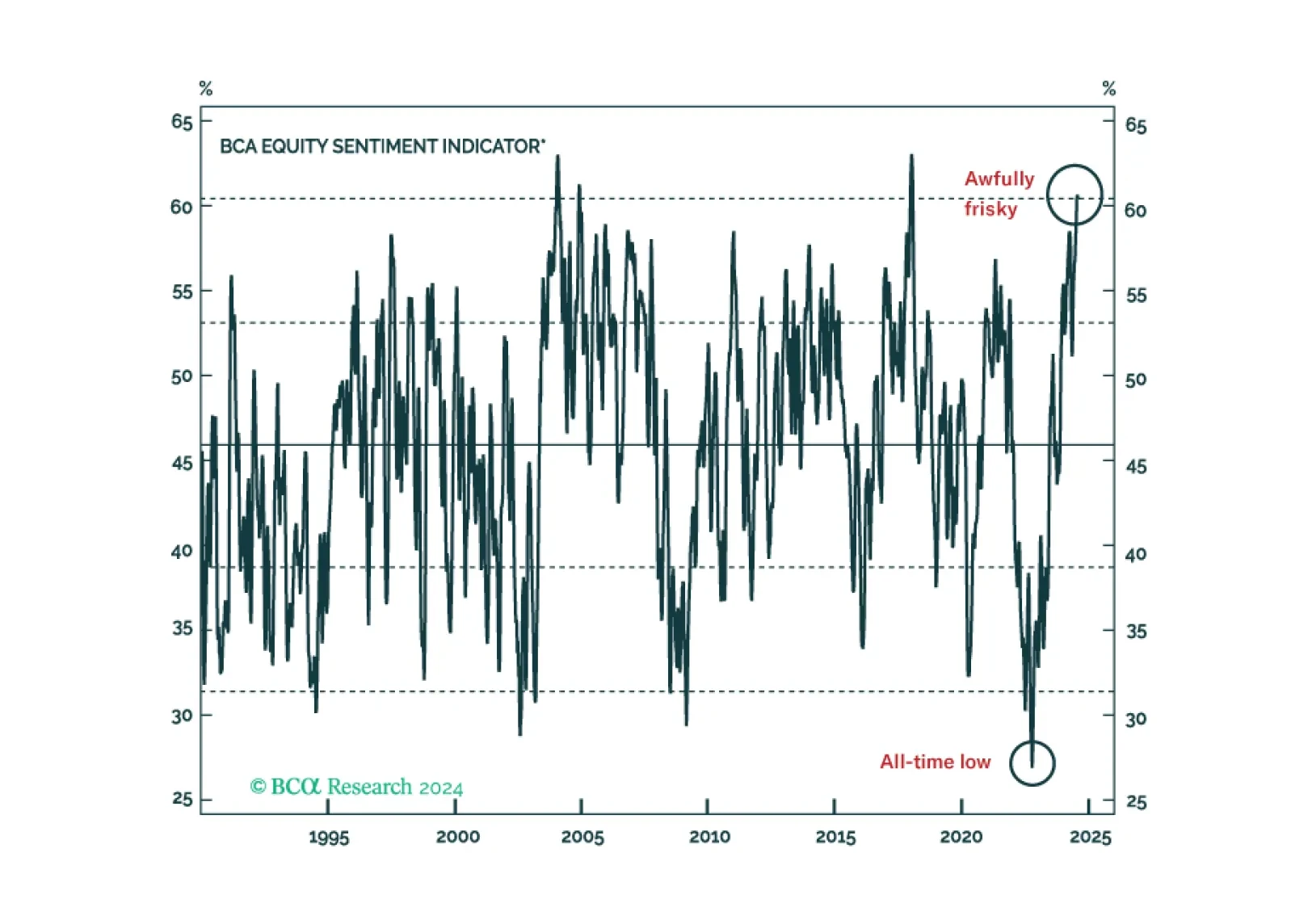
Mounting evidence that the labor market is on its way to cracking checked two more boxes on our checklist, driving us to tactically downgrade equities to underweight while upgrading fixed income to overweight. Our tactical and cyclical (6-12 months) views are now aligned as our conviction that a recession will begin before year-end has increased.
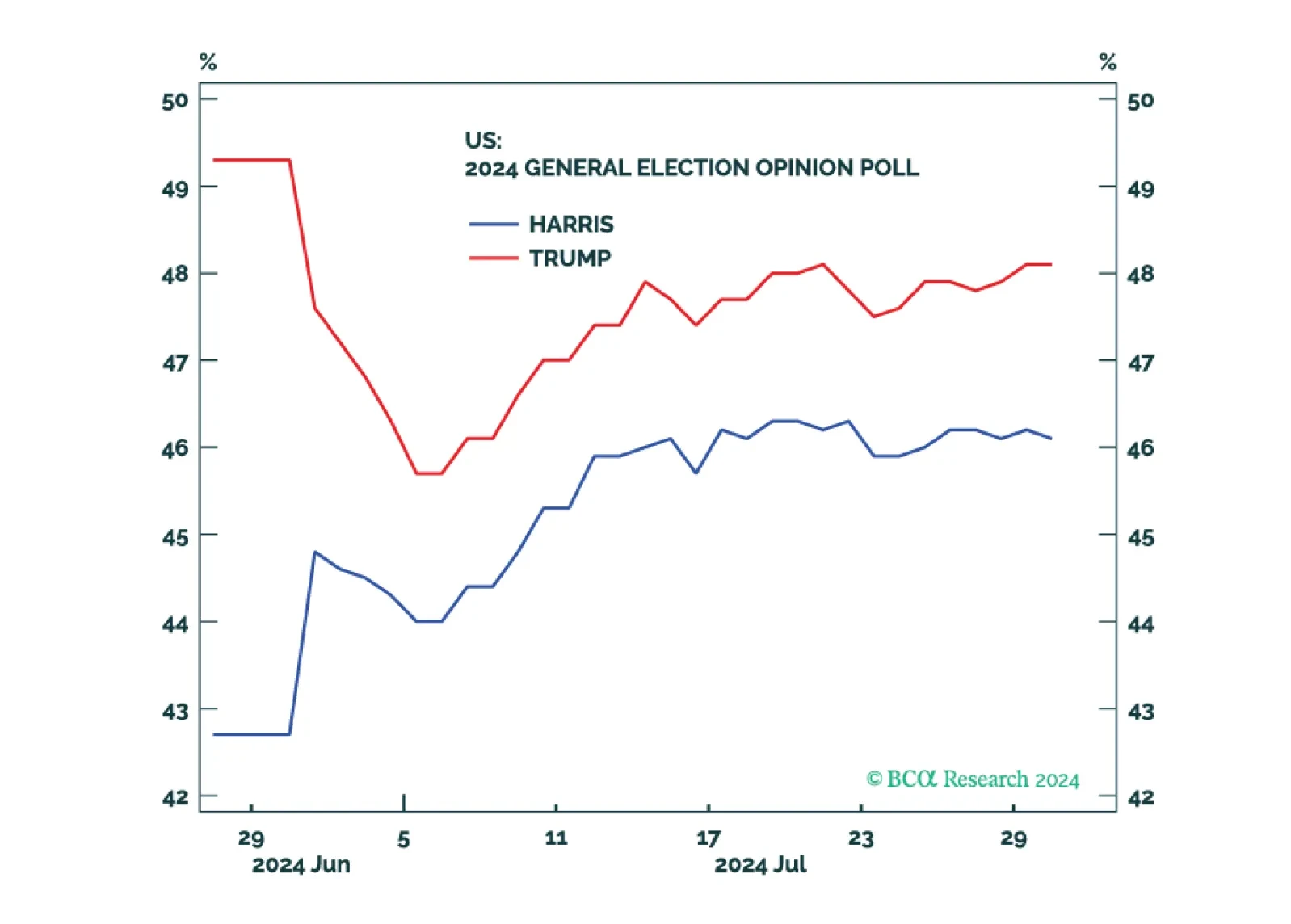
Republicans are favored but the election is still competitive. Equities, corporate credit, and cyclical sectors will fall until policy uncertainty is reduced.
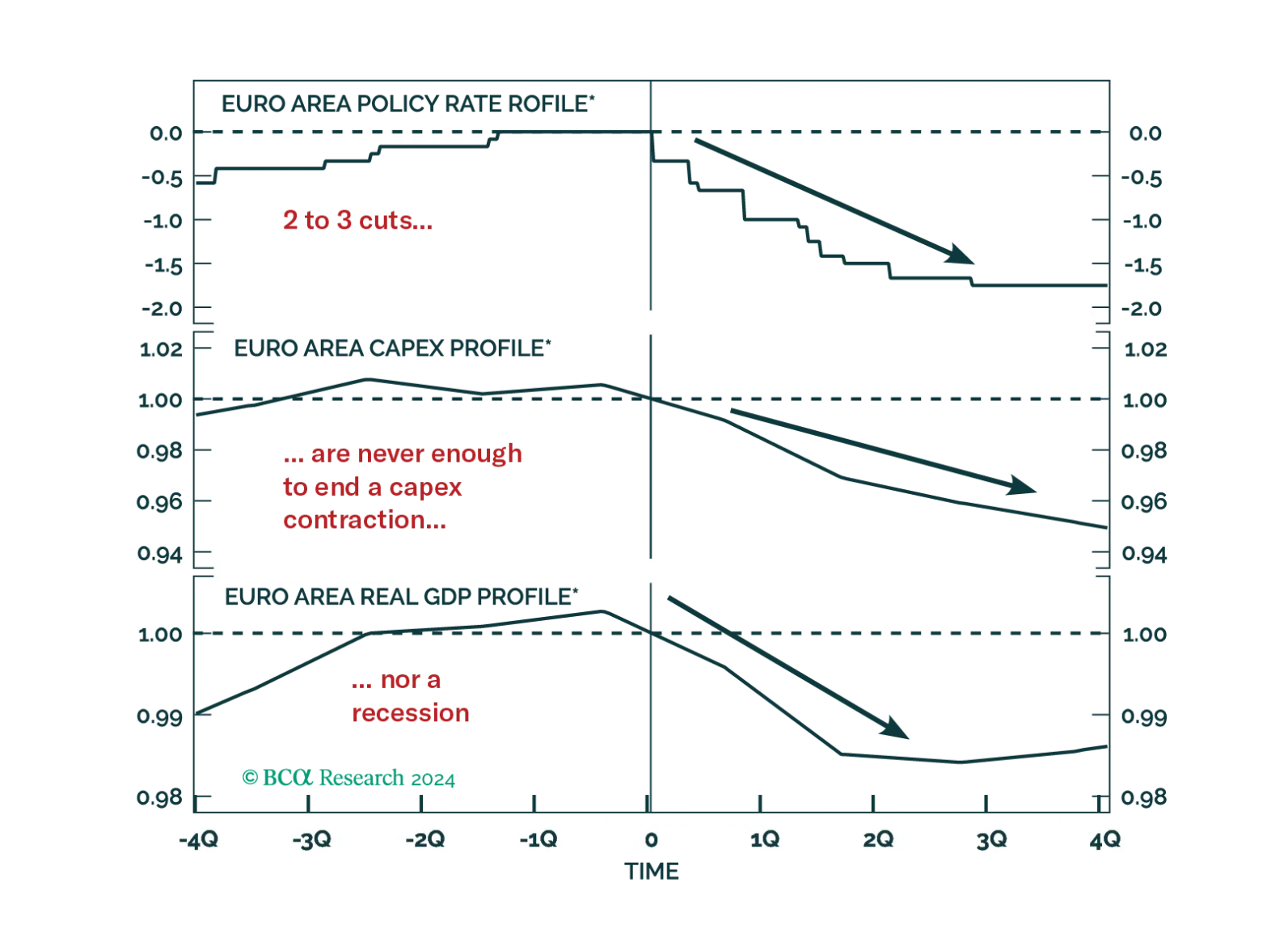
Investors hope that the ECB rate cuts priced into the curve will be sufficient to achieve a soft landing in Europe. History argues against this view, but will this time be different?