
Sorry, you need to enable JavaScript to visit this website.
Skip to main content

United States

In response to the Chinese stimulus announced in late September, our Emerging Market strategists upgraded EM equities to no more than neutral. Indeed, while these measures have triggered a sentiment-fueled rally from depressed valuation levels, conditions…
September nonfarm payrolls grew by 254 thousand, from 155 thousand in August, handily exceeding expectations of 150 thousand. Pro-cyclical manufacturing jobs declined by a lower-than-anticipated 7 thousand, while leisure and hospitality, as well as…

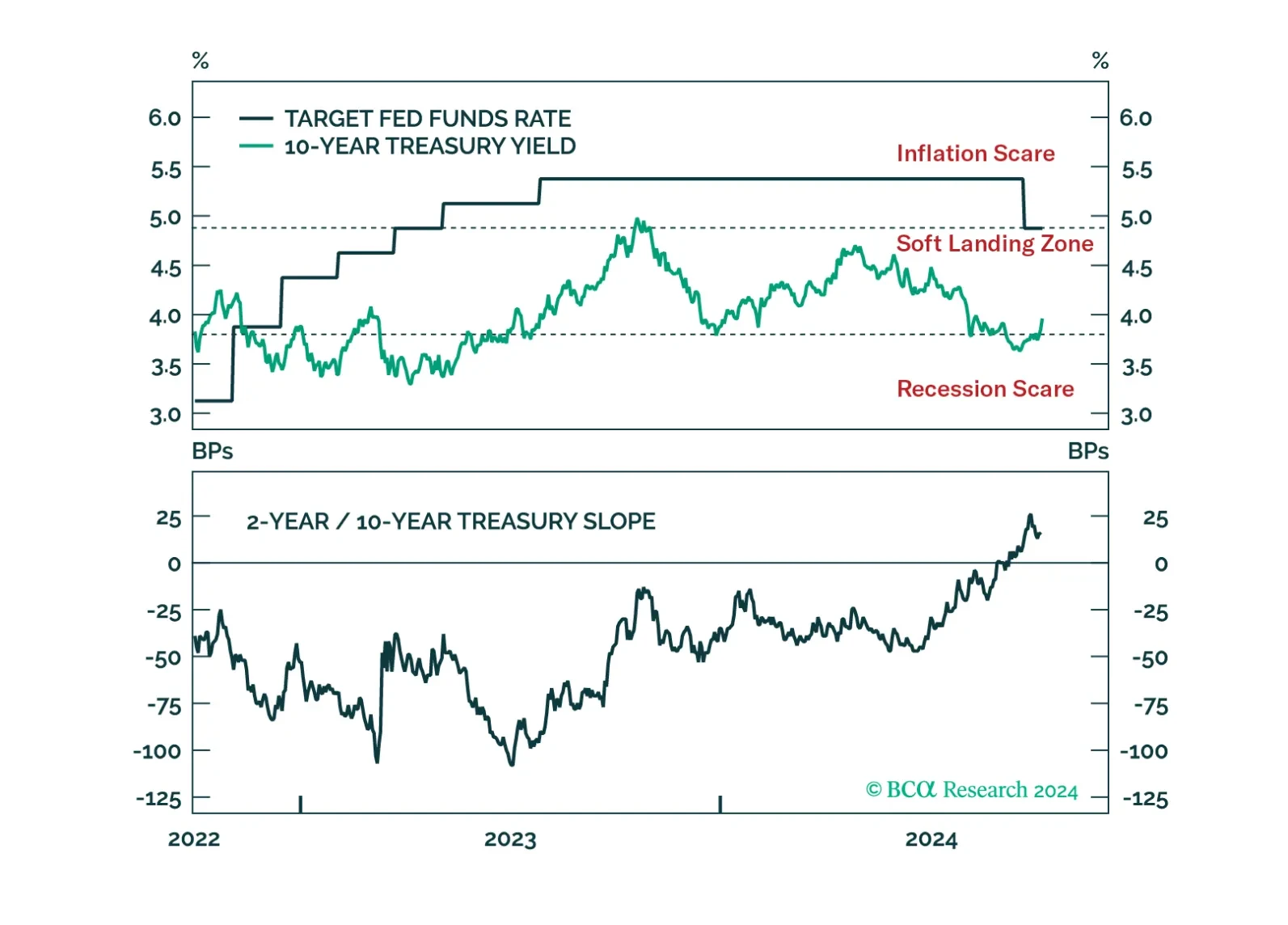
The bond market priced out a lot of recession risk after this morning’s employment report, and the 10-year Treasury yield has moved back into the Soft Landing Zone. We assess the data and consider whether we need to change our cyclical positioning.
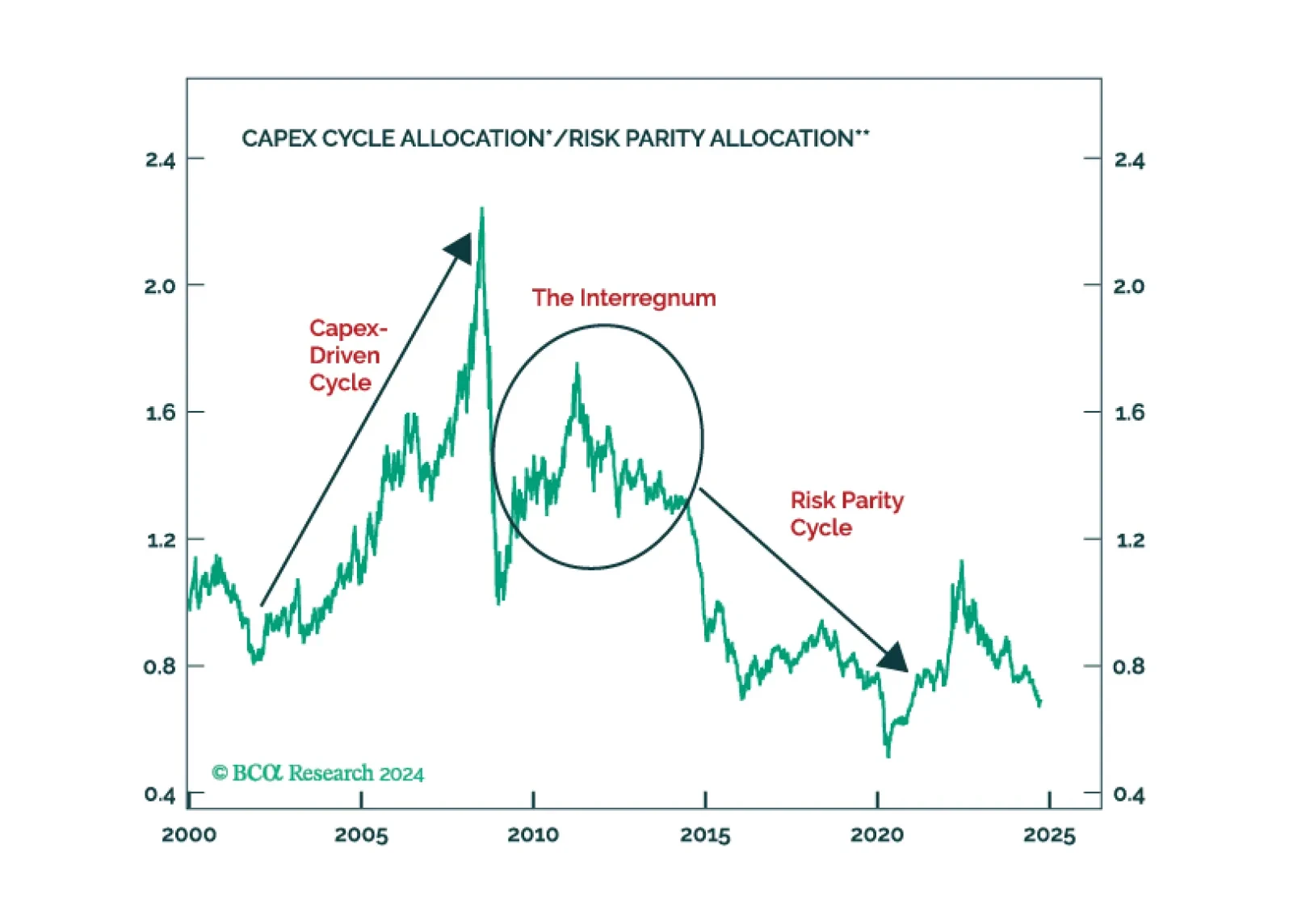
The ISM services PMI grew at an accelerating pace in September, from 51.5 to 54.9, handily exceeding expectations, and extending a three-month expansion streak. Growth was broad-based with an increasing number of industries (12 out of 17) reporting…
TIPS outperformed duration-equivalent nominal Treasuries by 86 bps so far in 2024 and our US bond strategists downgraded their allocation from neutral to underweight this week. The 10-year TIPS breakeven inflation rate remains comfortably in the middle of…
The JPM Global manufacturing PMI declined at an accelerating pace in September (49.6 to 48.8). Moreover, international trade flows deteriorated notably with the new export orders component falling from 48.4 to 47.5. A sector breakdown underscores broad-based…
The prospects of Fed rate cuts powered the S&P 500 Real Estate index’s rally. Real estate was the best-performing sector in Q3, outperforming the S&P 500 by nearly 12%. Can this sector pursue its lead now that expectations of monetary easing are…
According to BCA Research’s Global Investment Strategy service, the consensus expectation of a soft landing is wishful thinking.  Many investors have pointed to the mid-1990s as an example of when Fed easing paved the way for an economic boom.…

Western policymakers are pursuing three capital “T” Truths: China is evil, climate change is a major risk, and Russia is… also evil. Pursuing all three priorities at the same time presents a version of the classic “impossible trinity.”
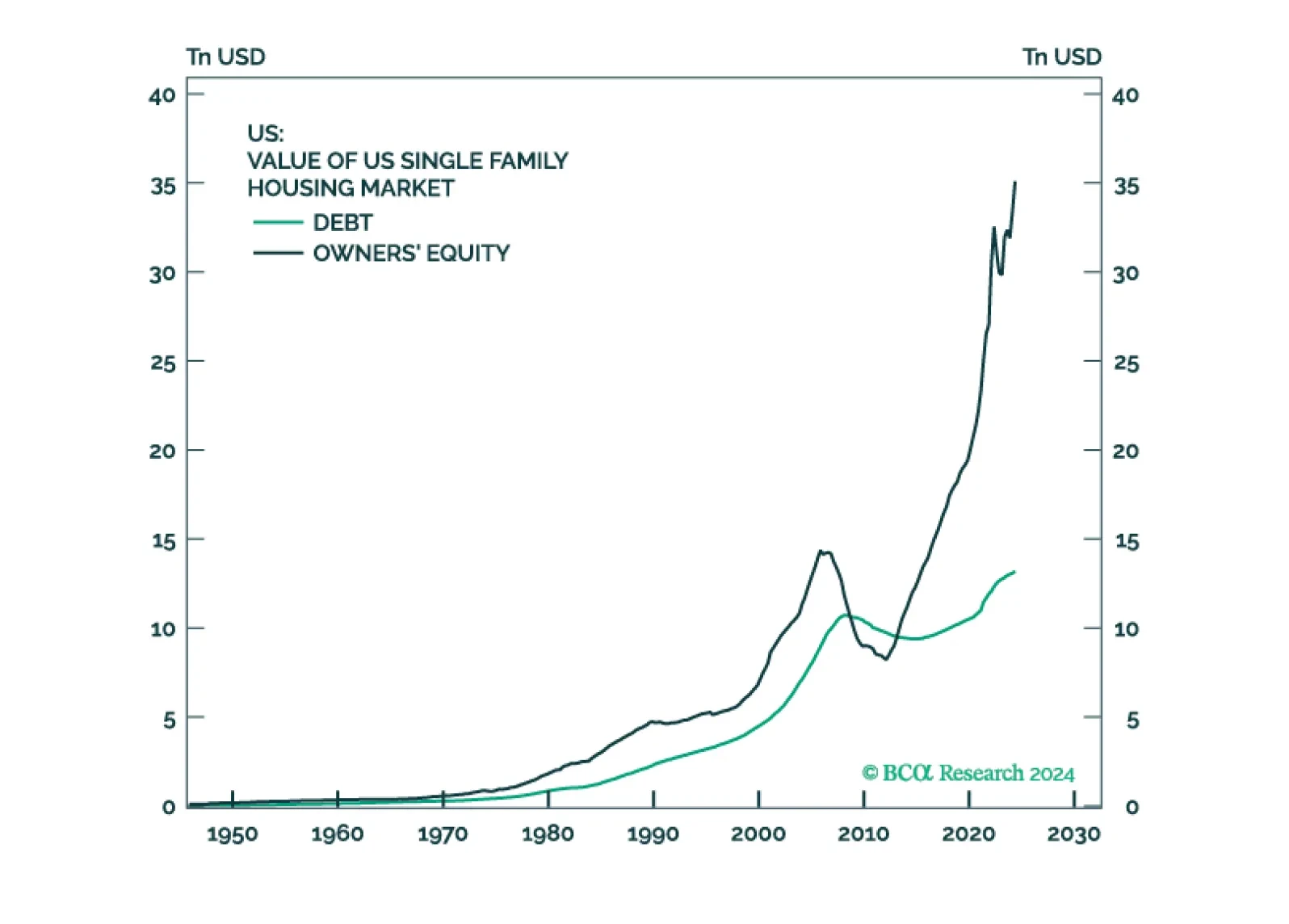
October seasonality tends to be negative for stocks in an election year. That is the only thing that has stayed our hand from shifting out of our tactical underweight on US equities, initiated – poorly – in July.
But the big macro news from September has not been bearish. The Fed has signaled jumbo cuts. Within seven weeks, the US central bank intends to cut by 100bps! Meanwhile, China appears to have reached a “policy bottom,” with its September 26 Politburo meeting signaling an extraordinary rhetorical shift towards fiscal policy. As such, we are starting to sniff out global reflation, akin to the 2015-2016 mid-cycle slowdown.
The labor market data still worries us. It is clearly deteriorating, on paper. Is it because of an imminent recession or “normalization?” It is difficult to say. We are open minded.
Finally, the Middle East tensions are again on the horizon. If Iran stays its hand against Saudi energy facilities – which we expect it to continue to do – the Iran-Israel conflict is a sideshow. Nonetheless, with global reflation afoot, we went long oil last week, on September 26. As such, geopolitics is a neat tailwind to that call.