Sorry, you need to enable JavaScript to visit this website.
Skip to main content

Fixed Income

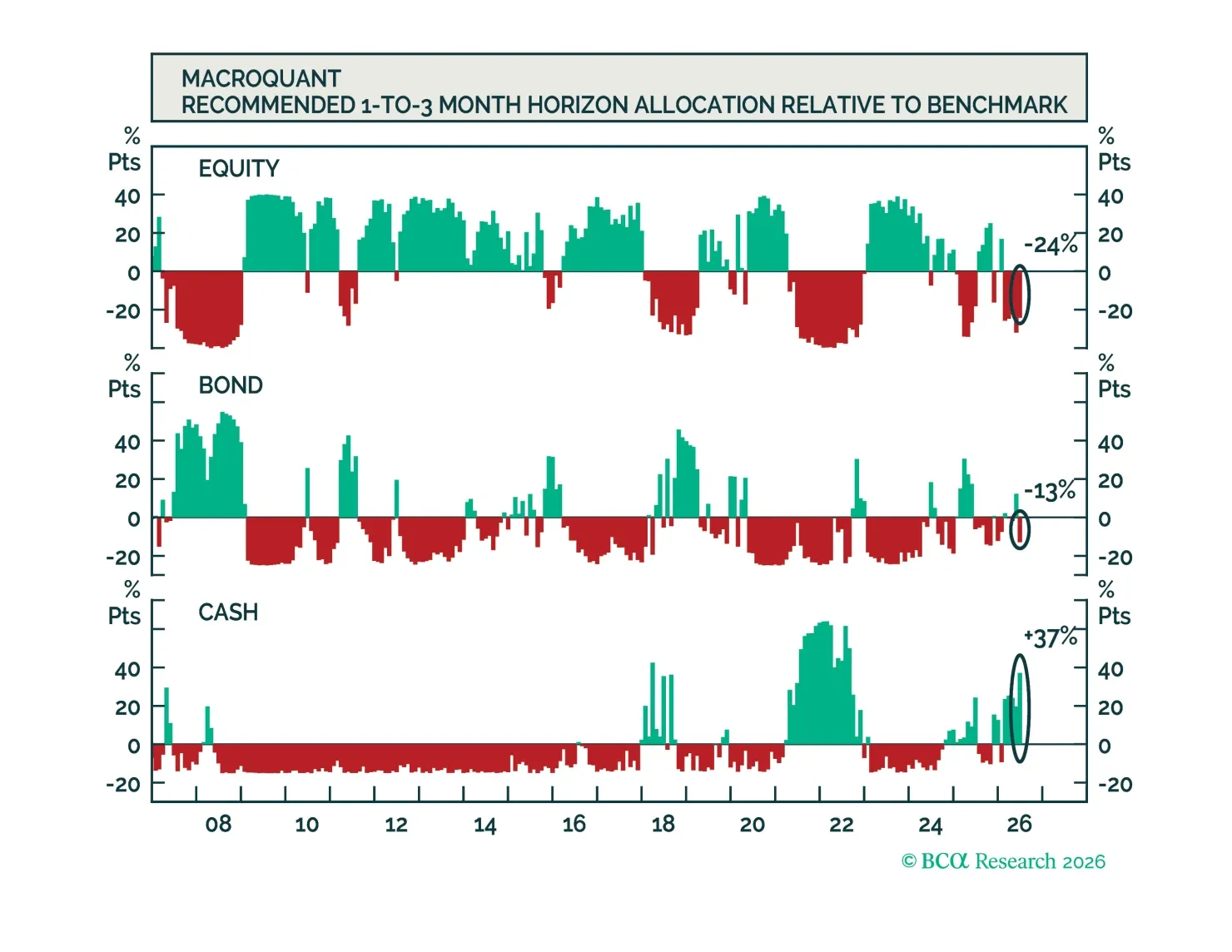
MacroQuant recommends a slight underweight position in equities, and favors a below-benchmark duration stance in fixed-income portfolios. The model is very positive on the US dollar, neutral on gold, constructive on copper, and very bullish on oil.
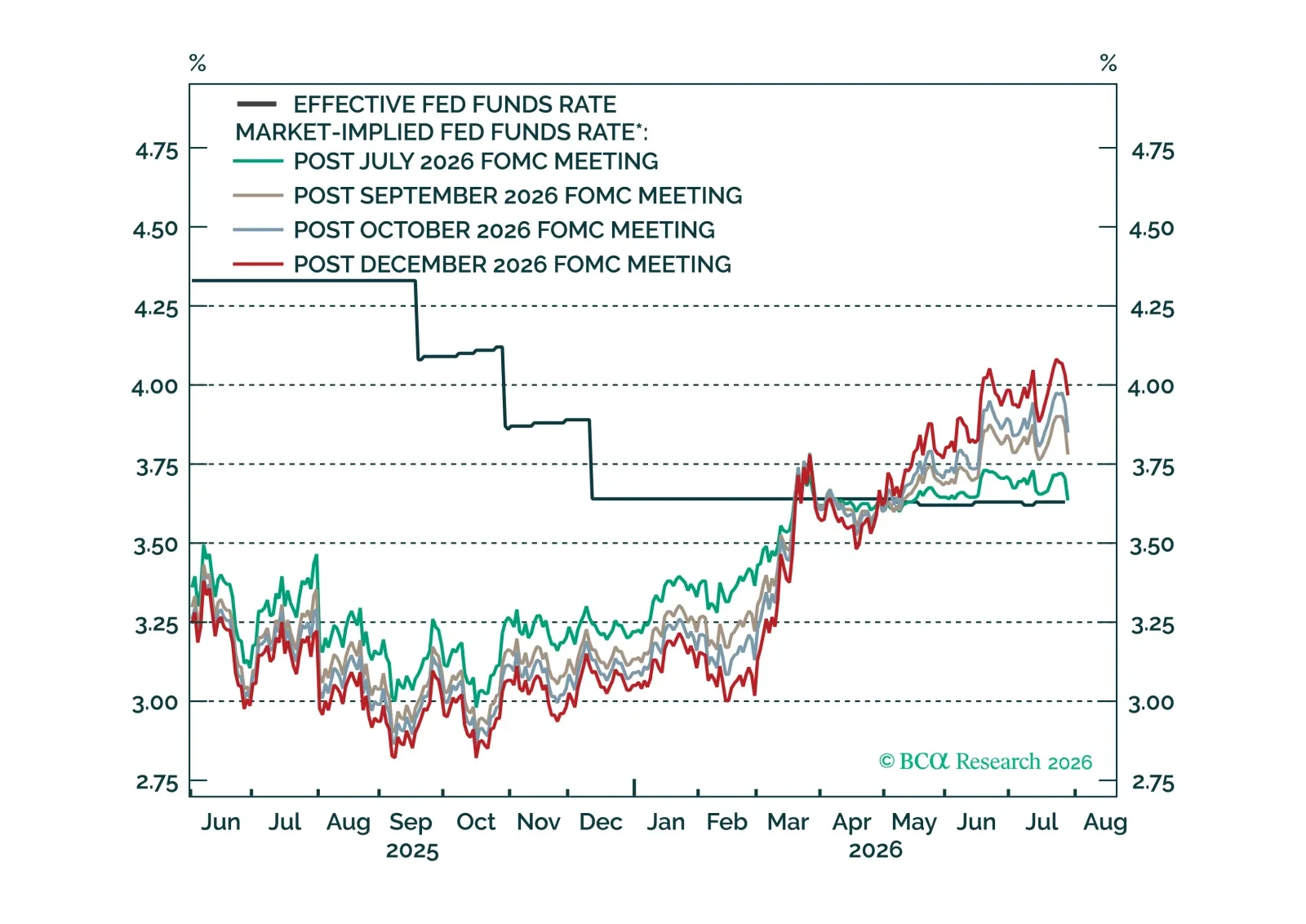
Despite today’s hold, the bar for a rate hike in September remains low and contingent on the next two core CPI reports.
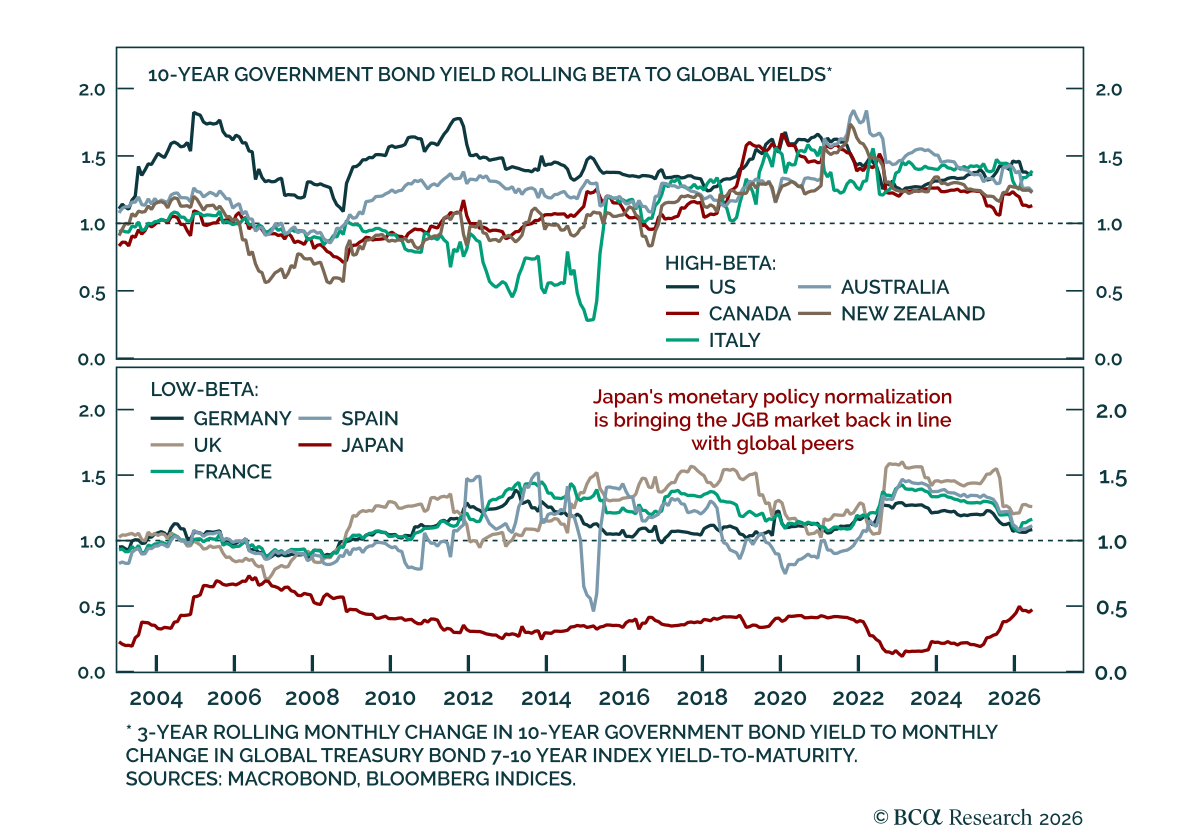
The BoJ’s reflationary plan and a low yield beta supports an underweight on JGBs. BCA has historically used cross-country yield betas to guide bond allocation by mapping each market’s sensitivity to global yields. Japan still stands out as the only major DM…
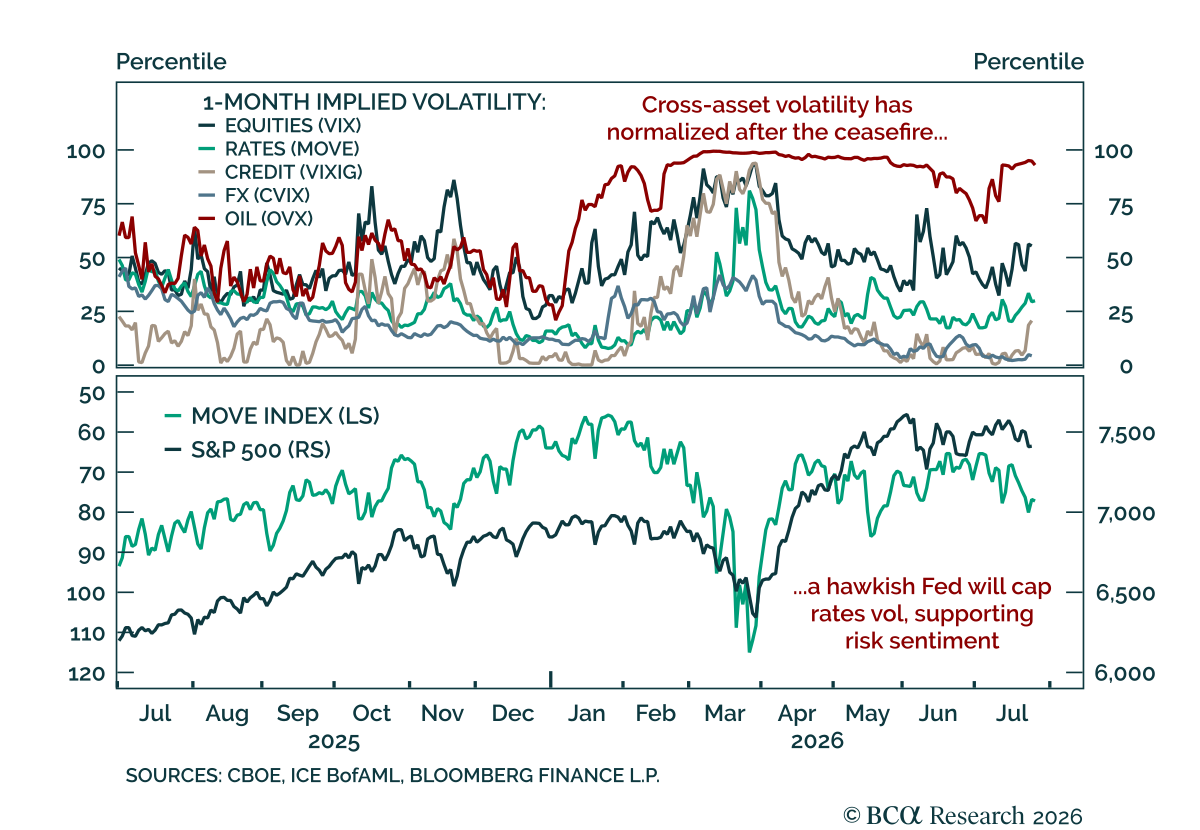
Cross-asset volatility has eased, and muted rates volatility supports our tactical overweight of equities relative to bonds. Cross-asset volatility spiked at the start of the year on the back of the Iran conflict, before broadly retreating. Outside oil,…
Special Report

Most Fed and pundit assessments of inflation expectations are overly narrow, focusing too much on long-term market-based measures. We favor a more qualitative approach that asks whether the inflation outlook is influencing household and business decision making.
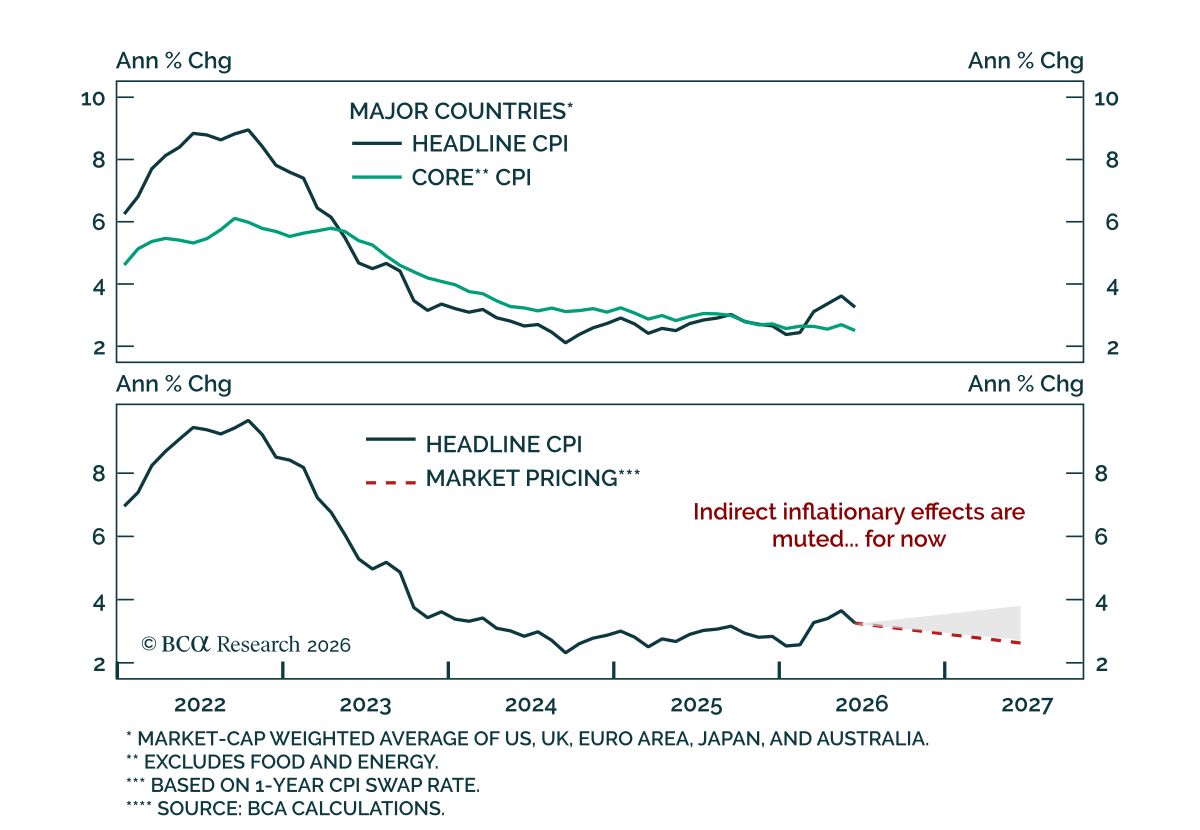
Our FICC strategists stay overweight global inflation-linked bonds (ILBs), betting that markets underprice the inflation risk from energy and shipping disruptions. Within this stance, our colleagues view US and UK ILBs as particularly attractive relative to…

Goldilocks, with fault lines underneath. Our first joint FICC outlook lays out where growth, inflation, and policy are headed this quarter and where the calm could crack.
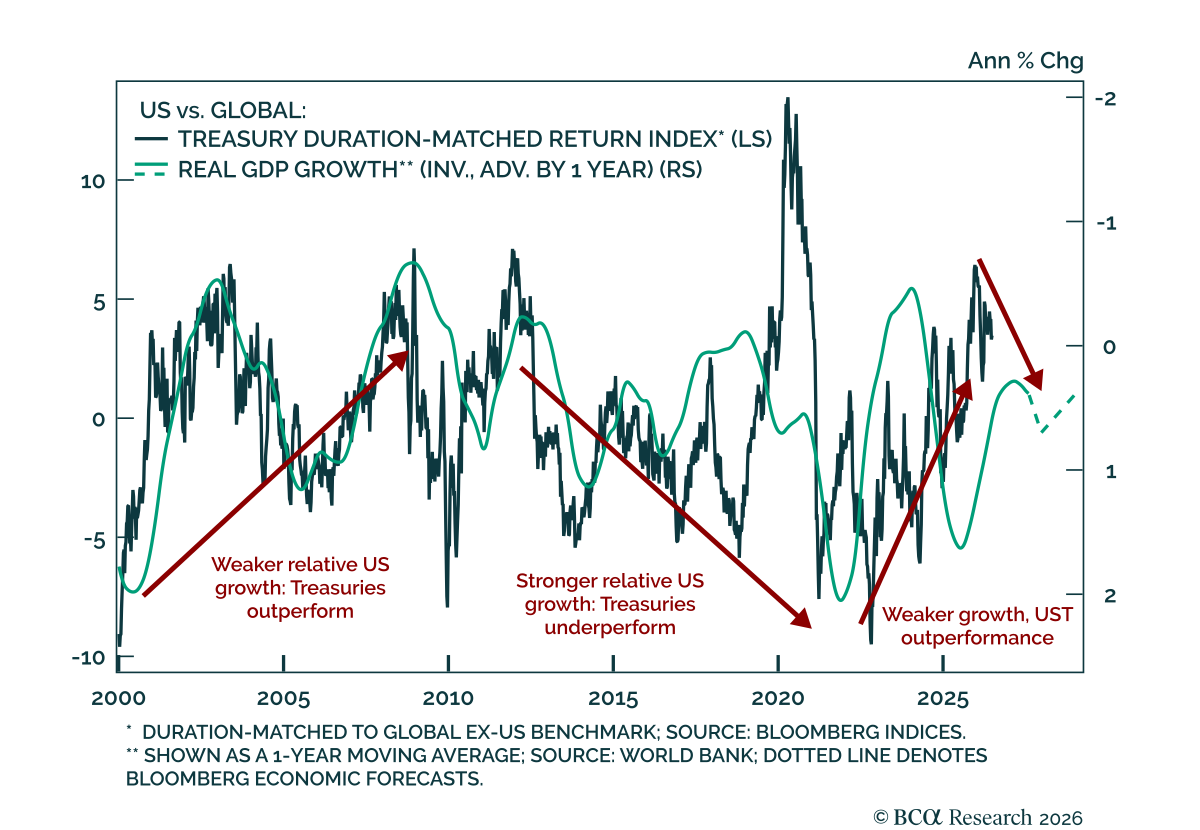
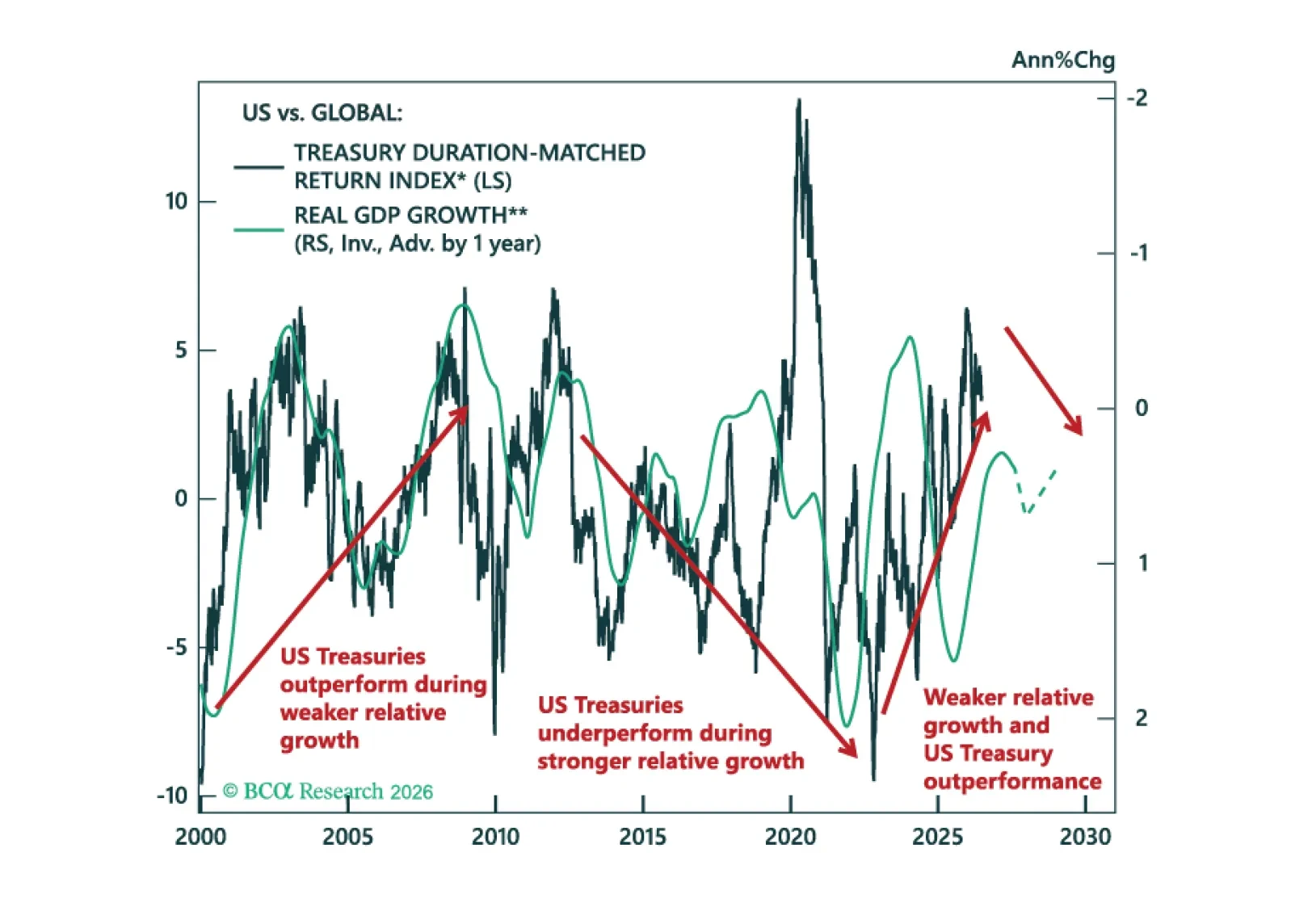
Our Global Fixed Income strategists expect US Treasuries to underperform other major government bond markets. They recommend overweighting UK, German, and Canadian government bonds against an underweight in US Treasuries and JGBs, while holding duration at…

We review our Model Bond Portfolio performance for Q2 and look ahead as fixed income markets move beyond the US-Iran conflict, which is finding its kinetic equilibrium. Valuations and growth differentials are moving against continued US Treasury outperformance.
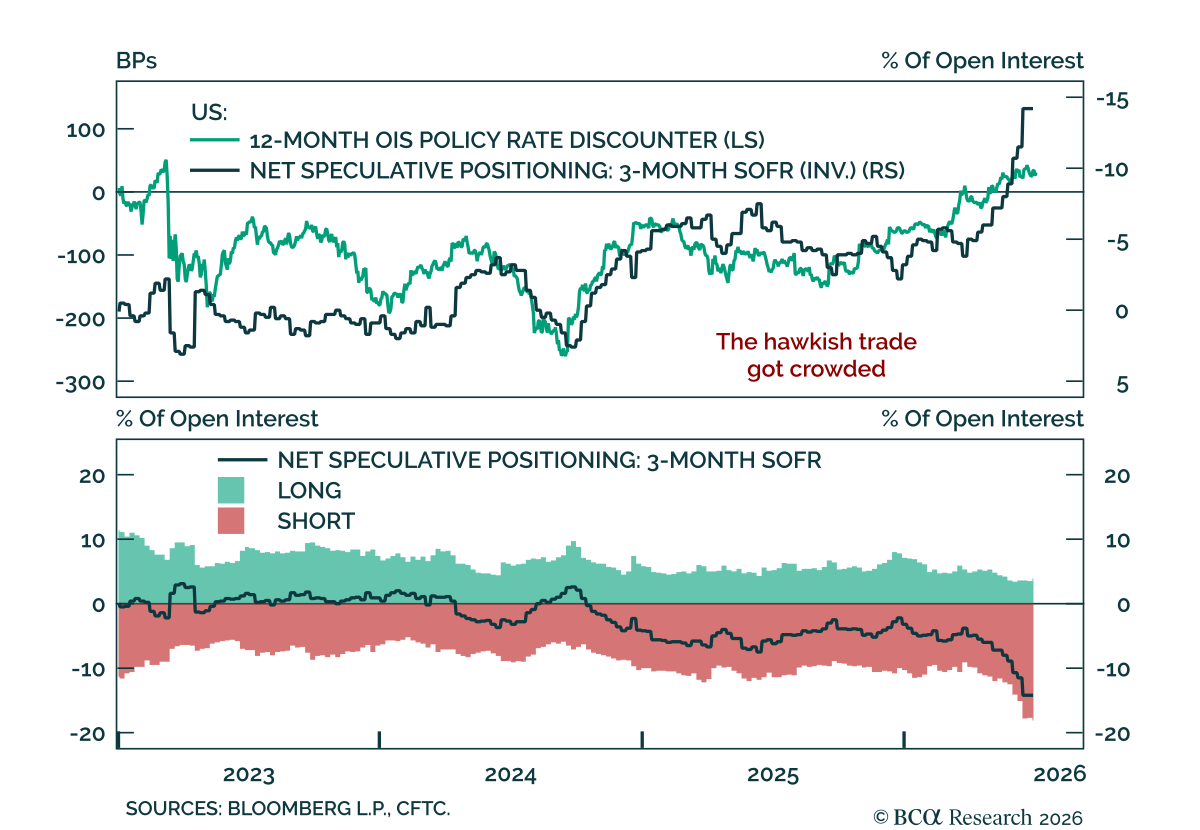
Peak hawkishness is likely behind us, supporting carry trades and risk assets. Despite a hawkish June Fed meeting, Treasury yields have now roughly returned to where they were before Chairman Warsh’s first meeting. The 2-year has tested and rejected new…