Sorry, you need to enable JavaScript to visit this website.
Skip to main content

Manufacturing

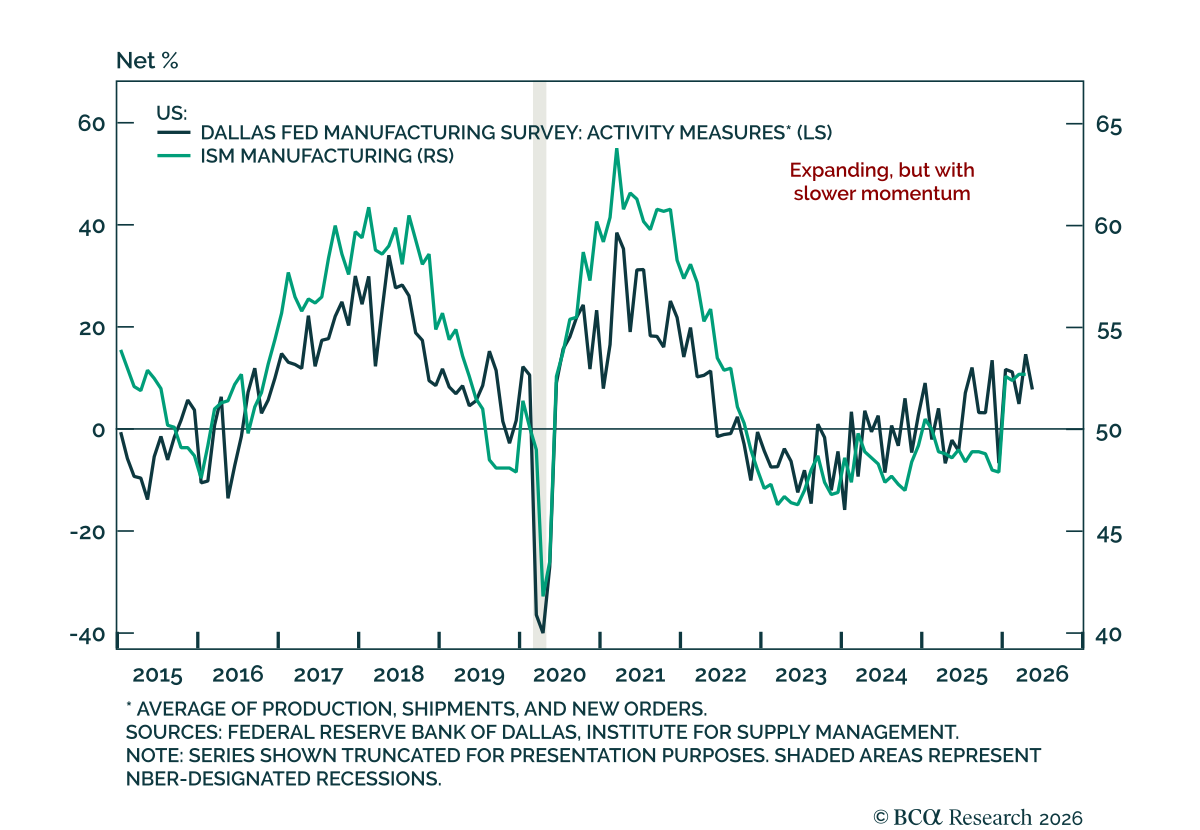
The Dallas Fed survey points to Texas manufacturing continuing to expand in May, but with slowing momentum. The production index fell 10 points to 9.4, signaling an average pace of output growth rather than a broad acceleration. The softer tone showed up…

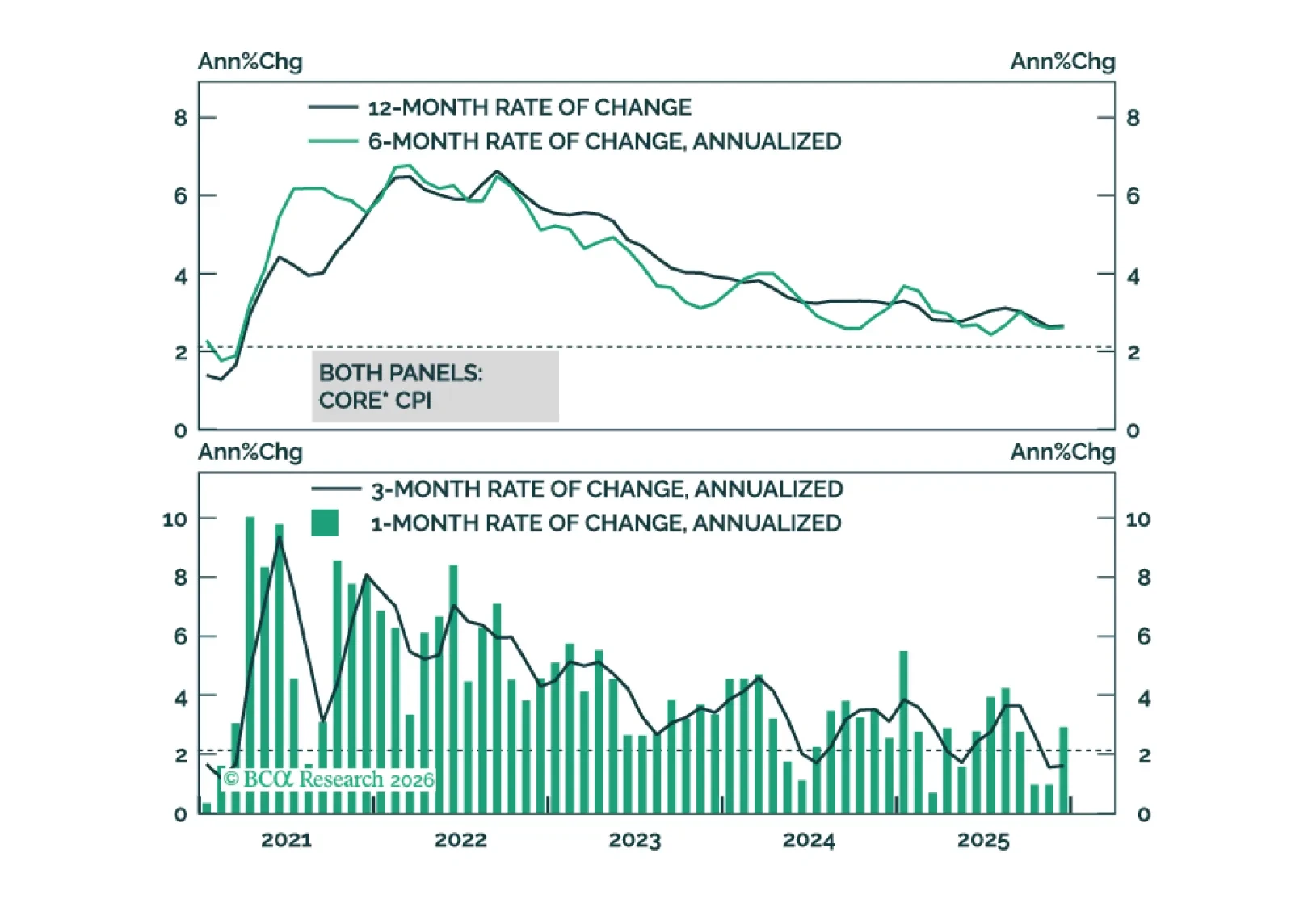
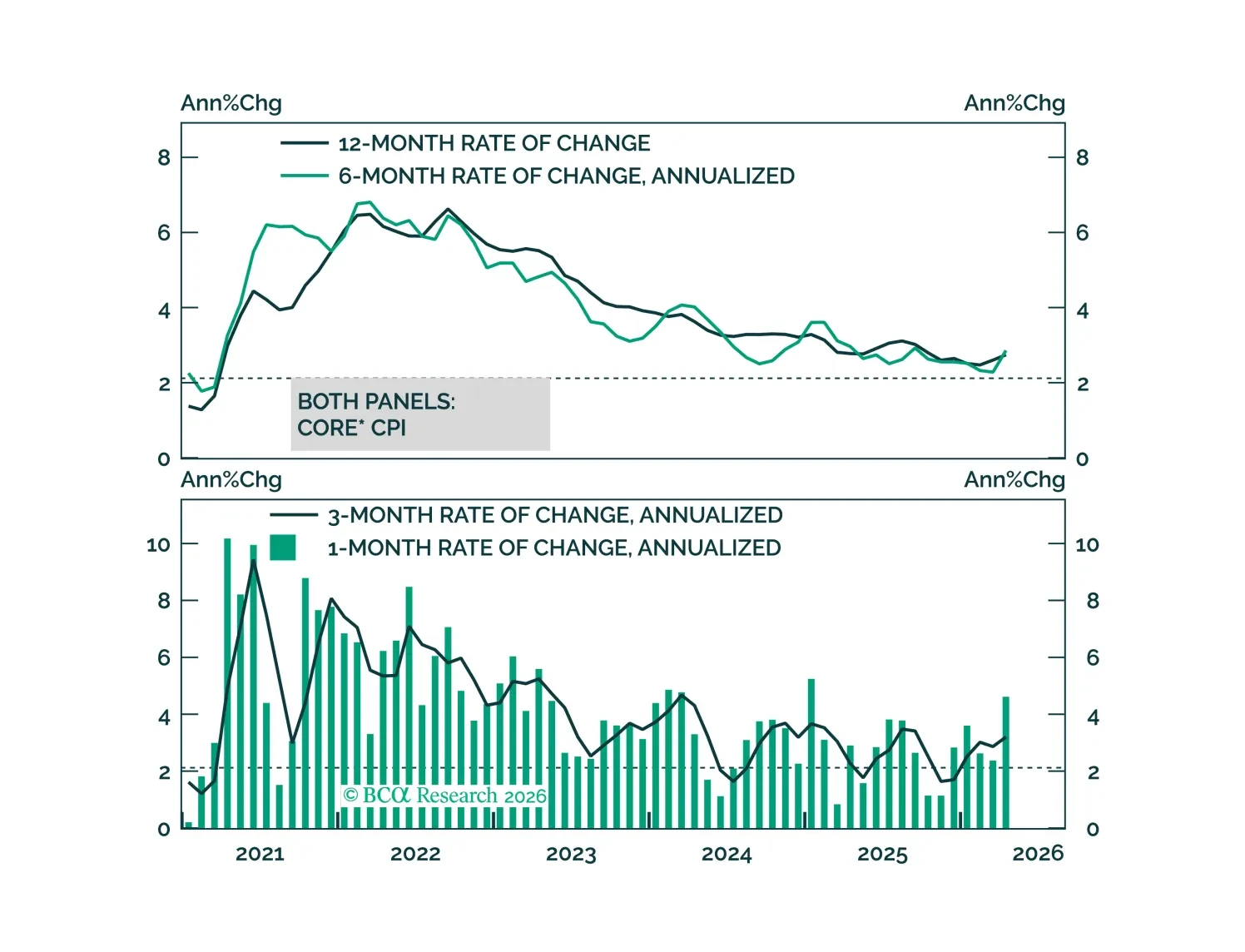
The April CPI report showed clear evidence of the direct effect of higher oil prices on inflation but, so far, limited evidence of passthrough to core.
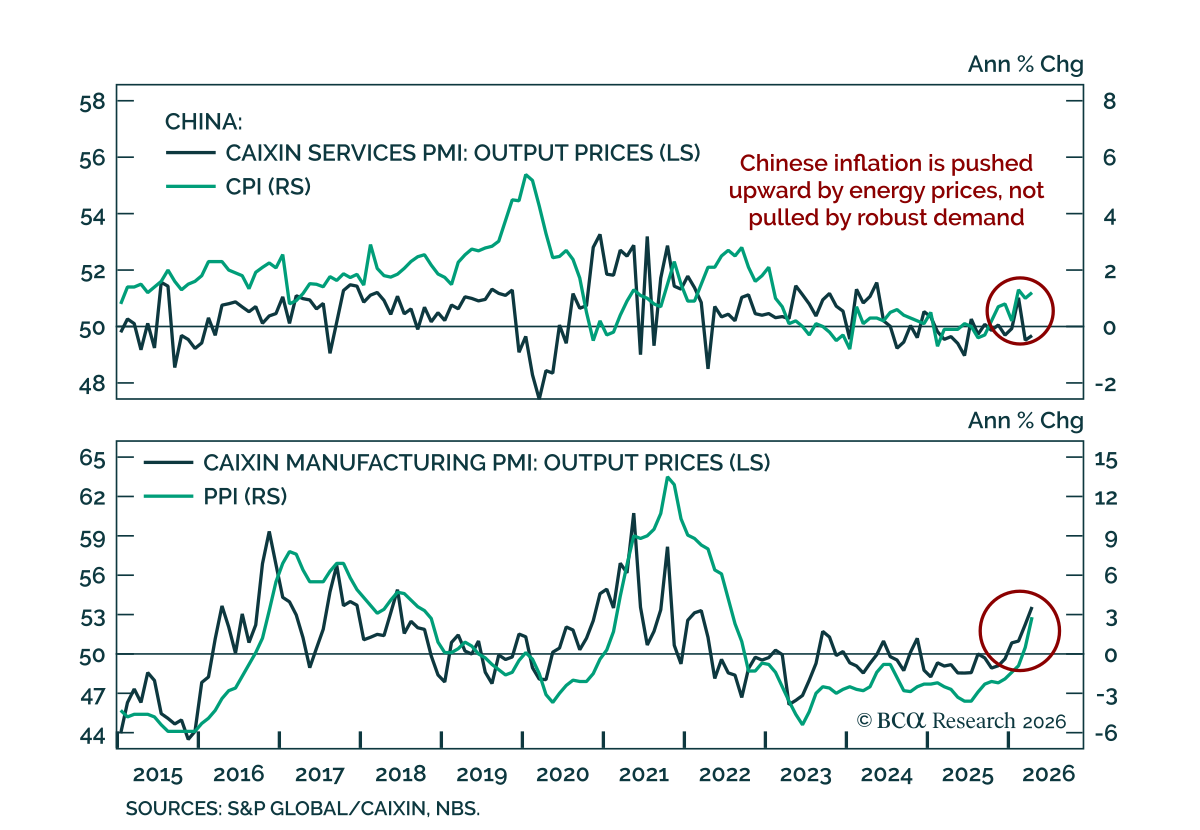
Chinese inflation surprised to the upside, but the rise reflects higher energy prices rather than stronger demand. CPI rose 1.2% y/y versus 0.9% expected, while PPI was the bigger surprise at 2.8% y/y, almost double consensus. The PPI move matters more…

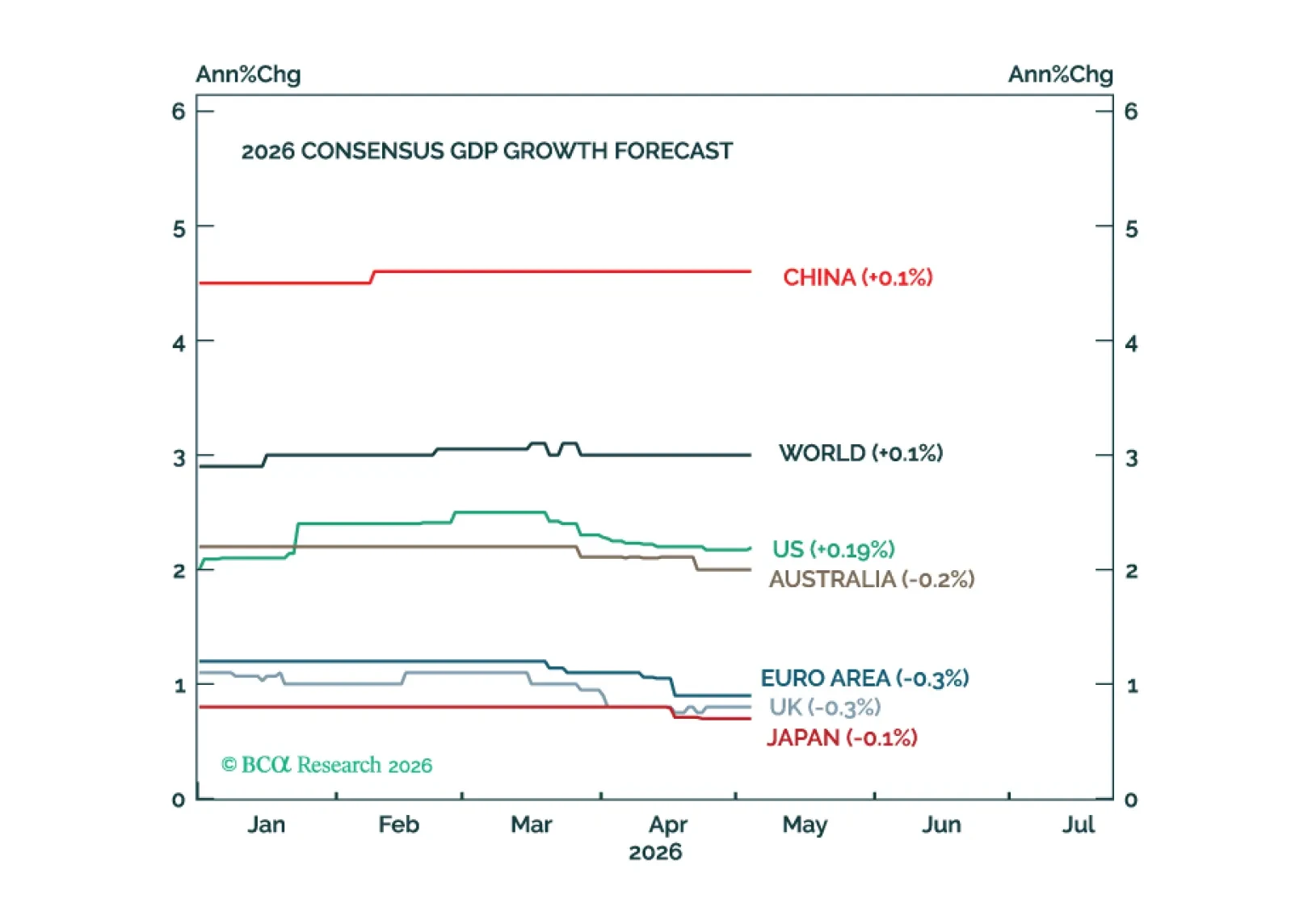
The global economy has weathered the oil shock reasonably well so far. However, the risk of a recession will increase meaningfully if the Strait of Hormuz remains closed into June.
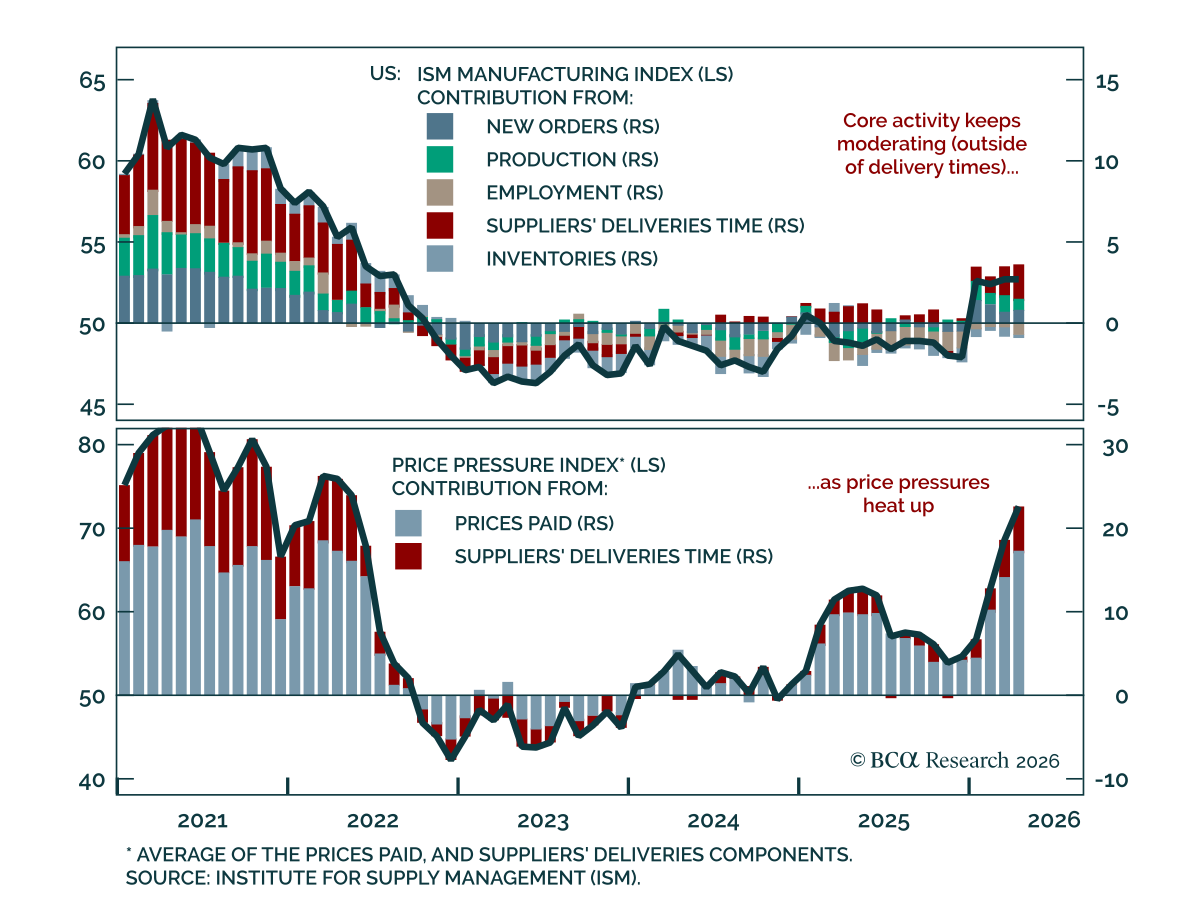
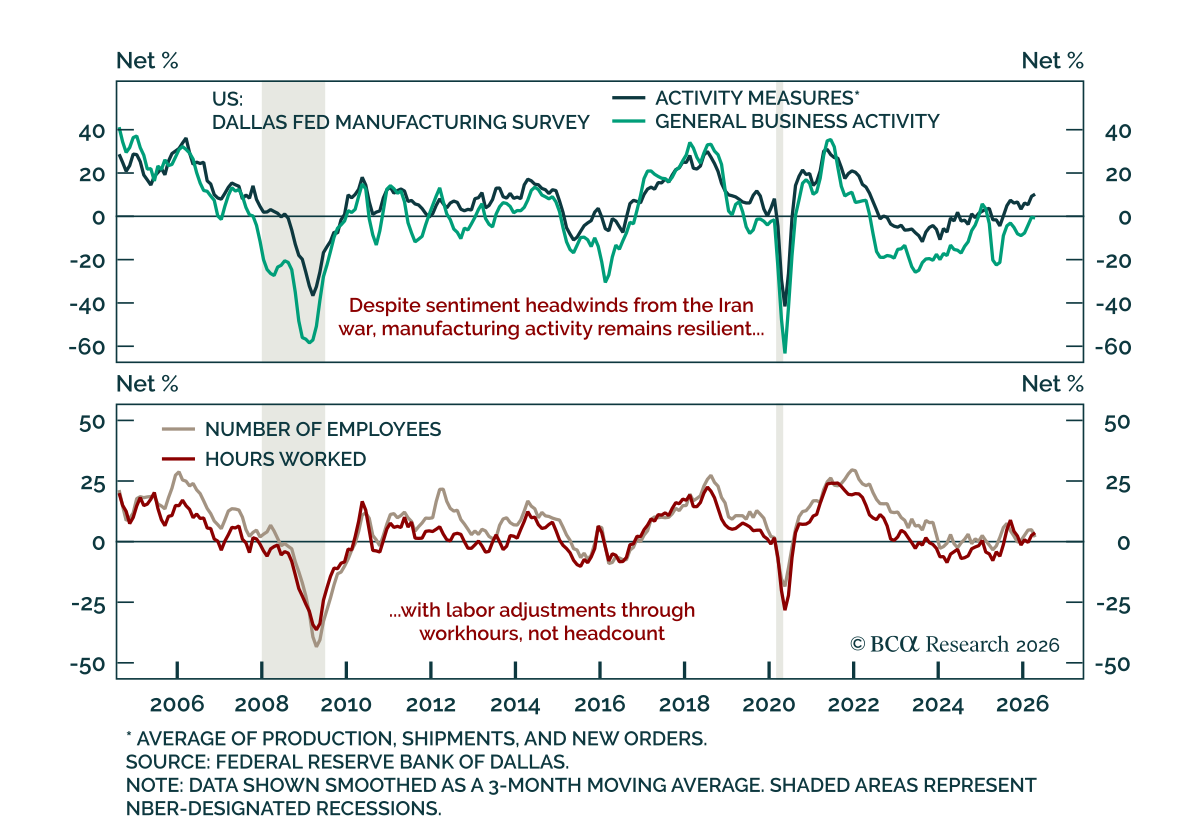
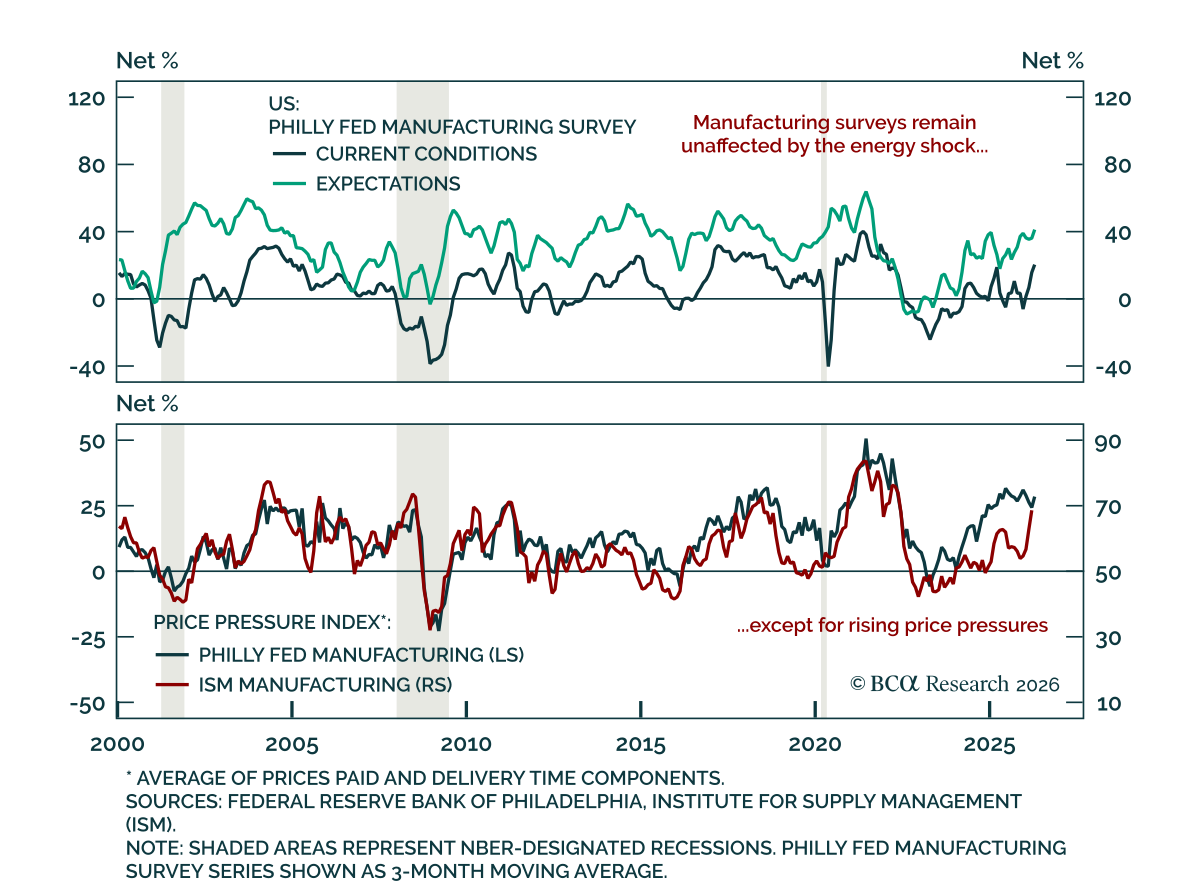
The April ISM Manufacturing report was flat on the headline, but softer on growth and hotter on inflation underneath. The index held at 52.7, missing estimates. Despite the unchanged headline, the underlying signals pointed to mild growth deterioration. New…
The April Dallas Fed survey missed estimates, but underlying activity remained firmer than the headline suggested. The manufacturing headline index fell to -2.3 from -0.2. Comments were mixed, but respondents broadly pointed to slower sales due to uncertainty…
The April Philly Fed survey beat estimates and pointed to resilient manufacturing activity despite the energy shock. The headline index rose to 26.7 from 18.1. New orders and shipments were strong and both increased. Labor signals were mixed, as the…
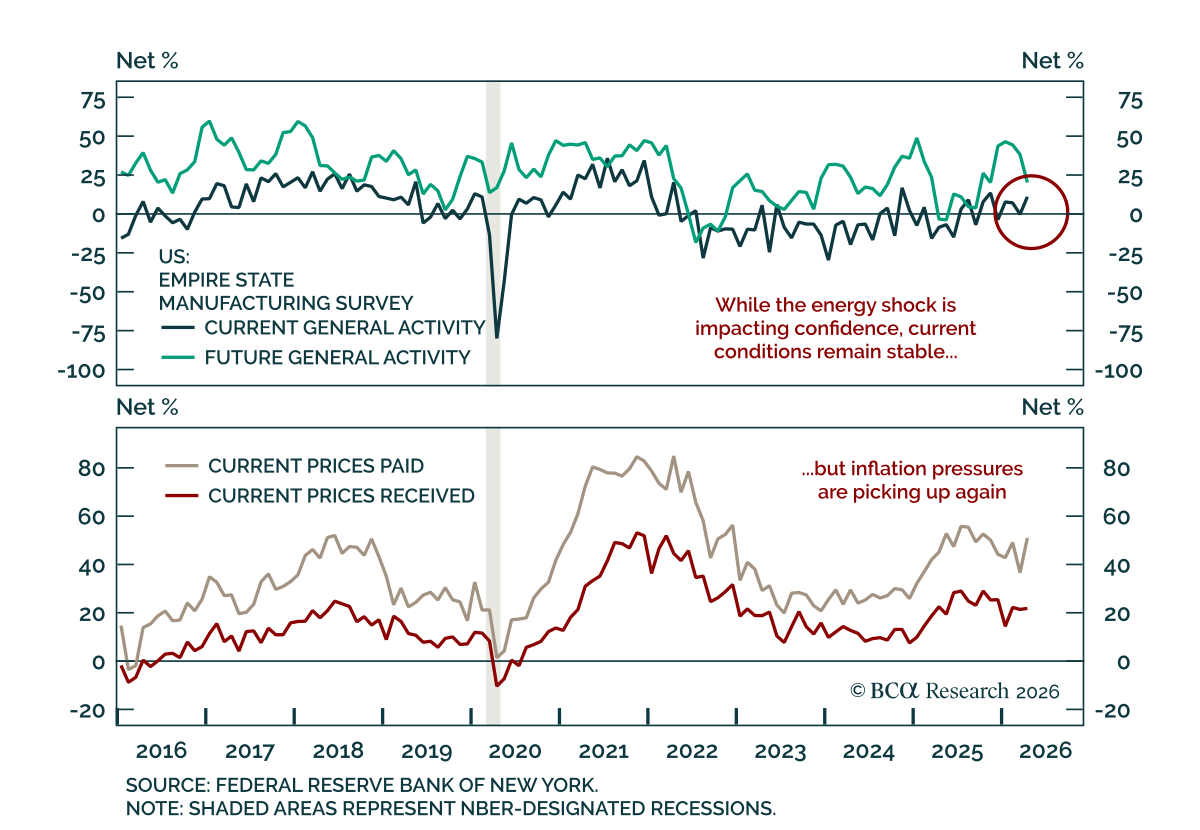
The April Empire survey beat estimates and pointed to modestly improving activity alongside rising price pressures. The headline index rose to 11 from -0.2 in March. New orders and shipments increased significantly. Employment measures also improved, with…

This morning’s CPI report signals that the worst of the tariff impact on inflation may already be in the rearview mirror.
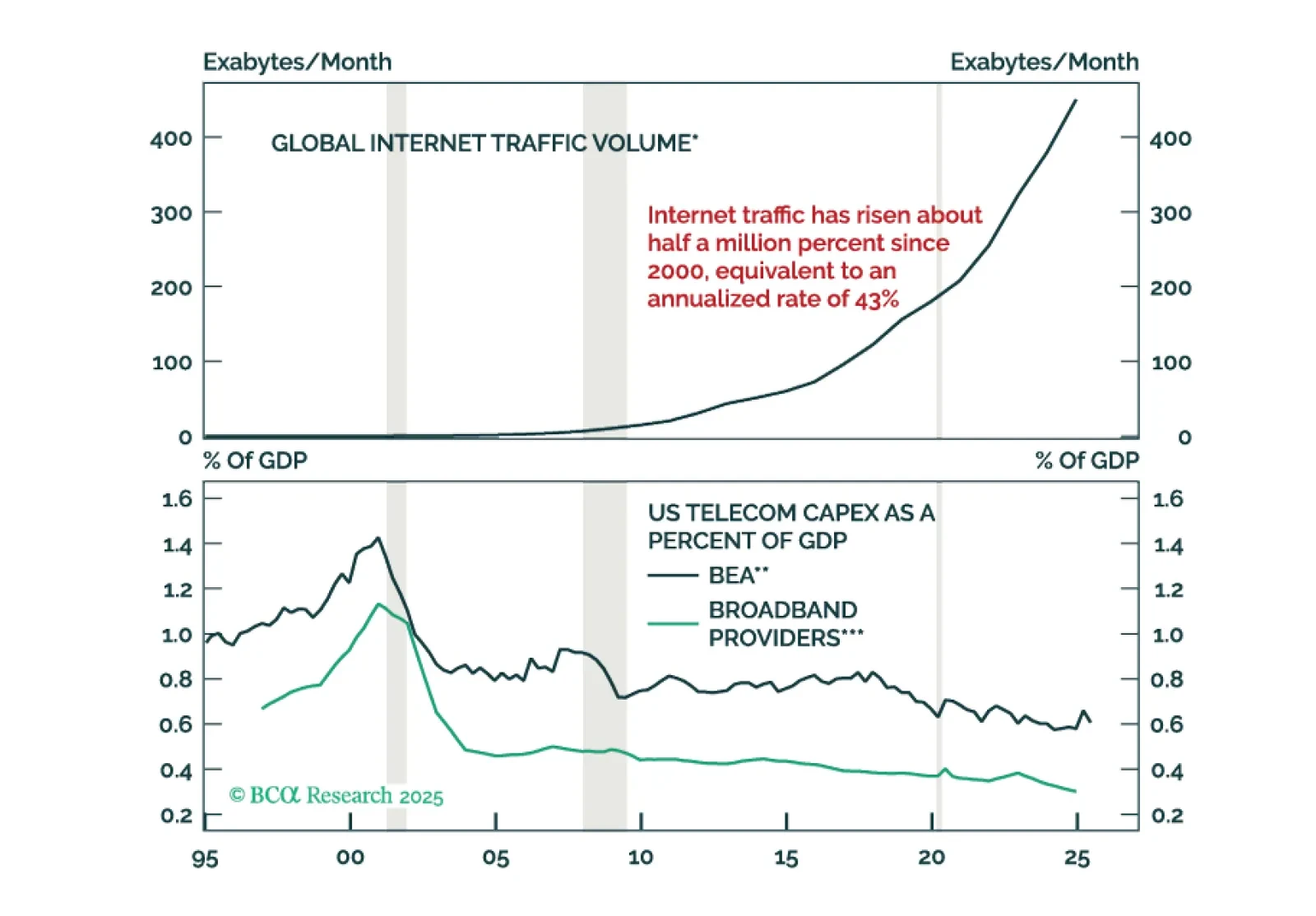
This year, we once again present our 2026 outlook as a retrospective from the future – a future in which the AI boom turned to bust.

Next week, please join me for a Webcast on Wednesday, December 17 at 10:30 AM EST (3:30 PM GMT, 4:30 PM CET) to discuss the economy and financial markets. We will also host a Webcast for APAC on Tuesday, December 16 at 8:00 PM EST (9:00 AM HKT+1 day).

And with that, I will sign off for the year. I wish you and your loved ones a very happy and healthy 2026. We will be back on Friday, January 2 with our MacroQuant Model Update.