Canada
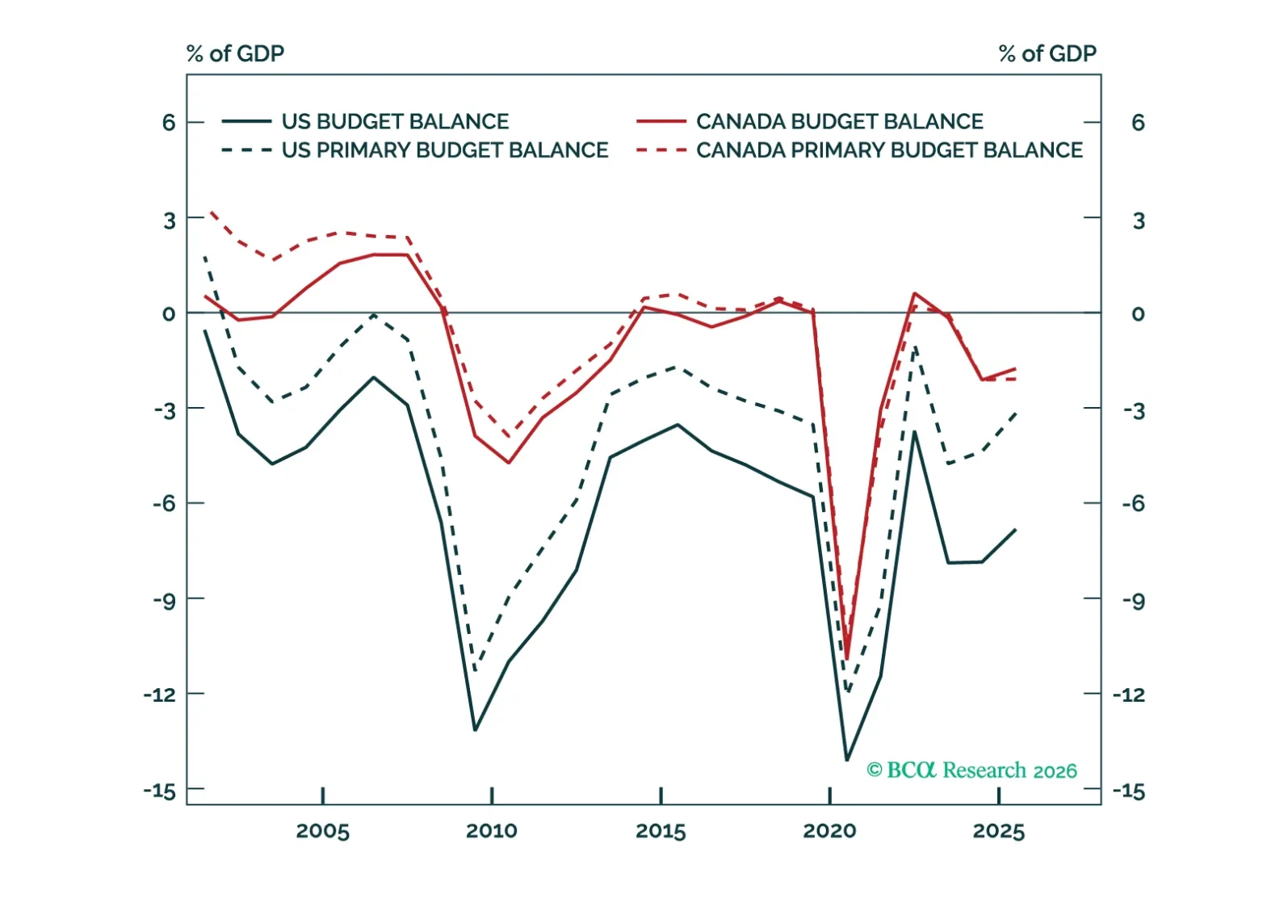
Canada may welcome a trade skirmish with the US. It has ample fiscal room with which to retaliate and its domestic political calculus – with bubbling risk of secession – means that fighting an external threat is a boon, not a bore.
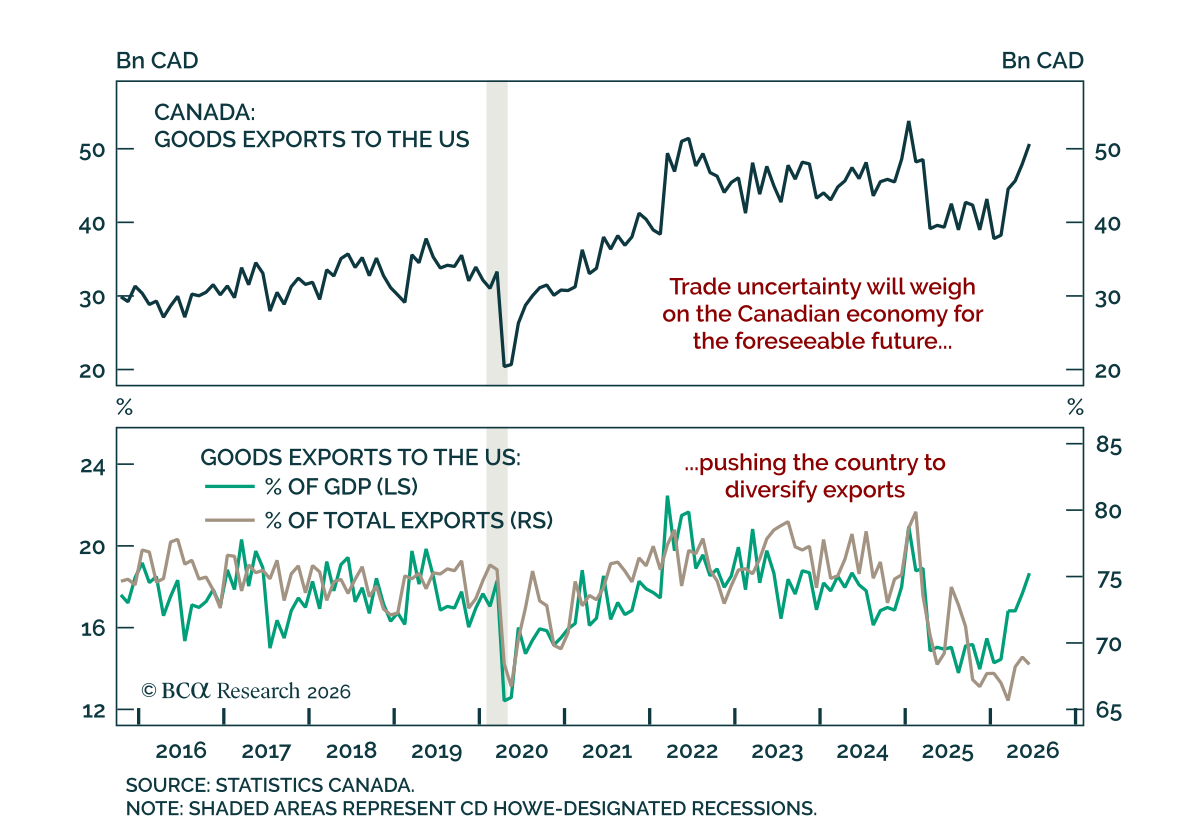
The collapse of US-Canada trade talks adds uncertainty to an already soft Canadian macro backdrop, favoring Canadian bonds relative to US Treasuries. Negotiations broke down minutes before the midnight deadline, with both sides accusing the other of adding…
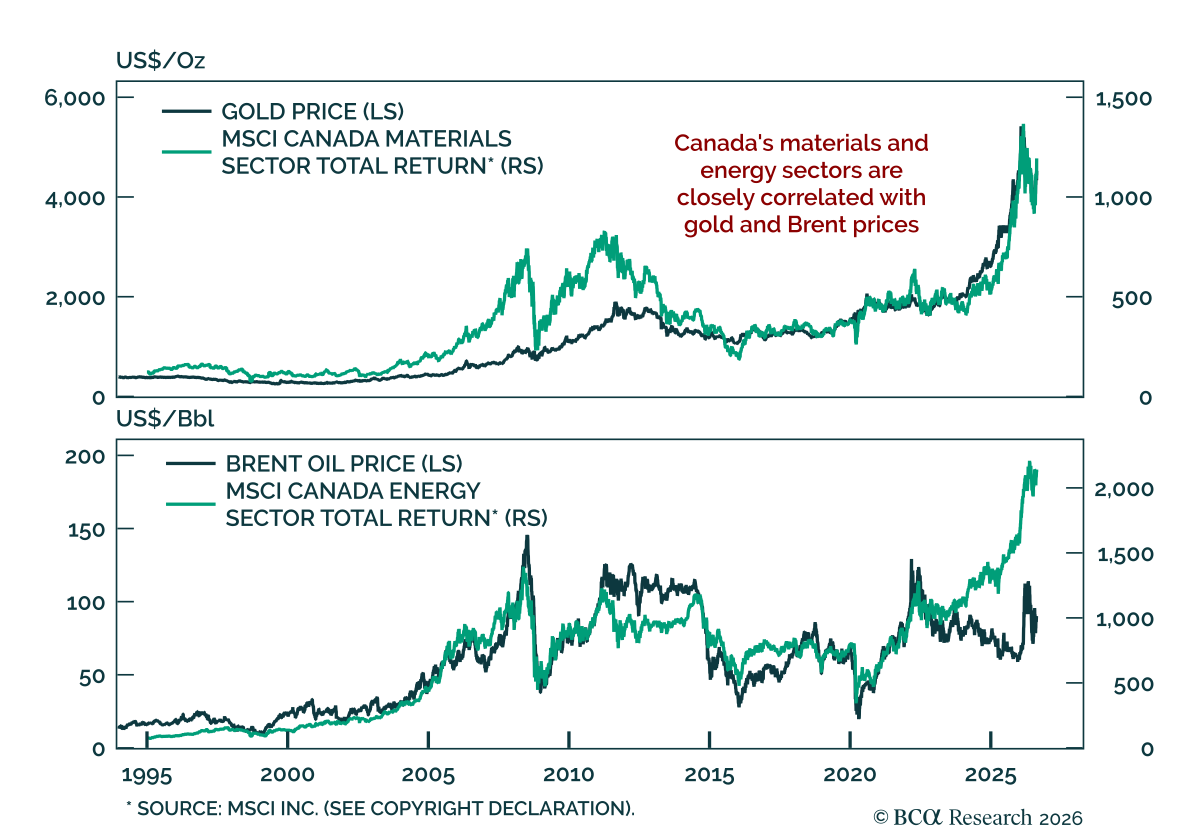
The Canadian stock market’s significant exposure to materials and energy offers valuable diversification benefits. Materials account for roughly 19% of the market and are closely tied to gold prices, while energy represents another 17% and is highly sensitive…
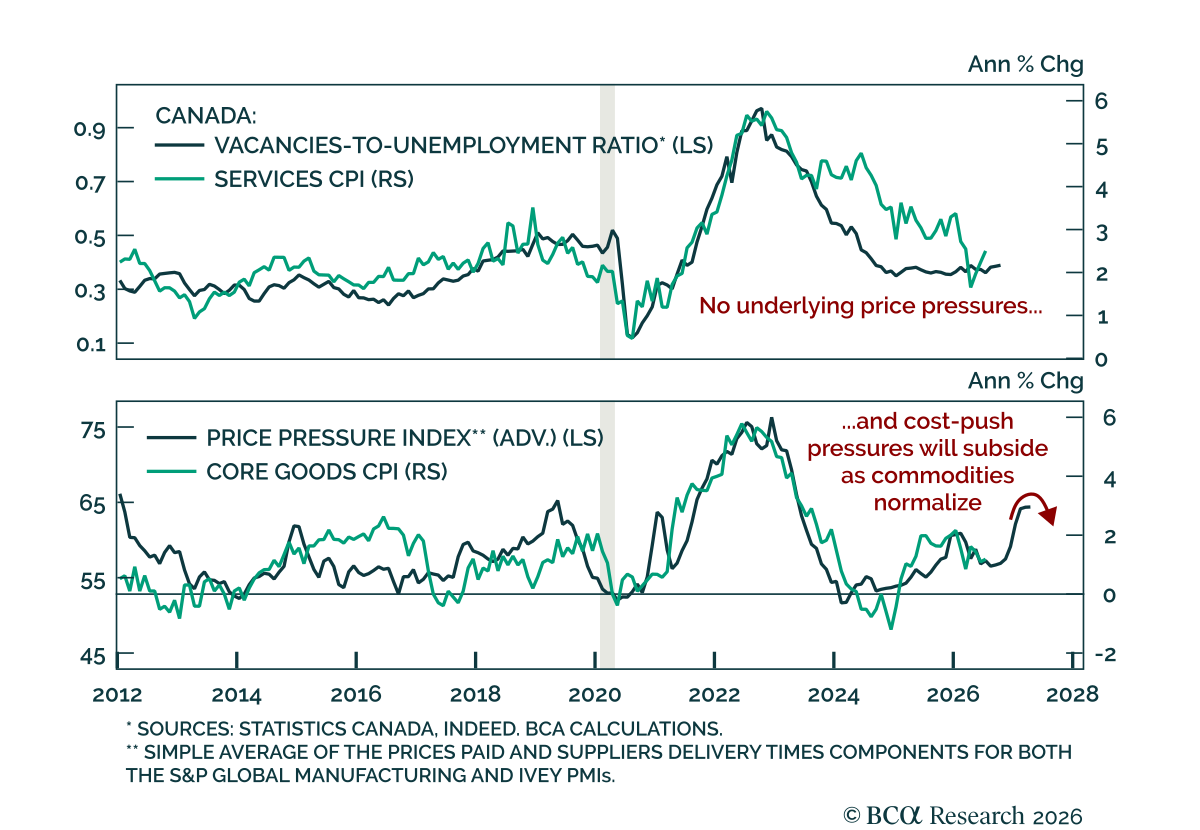
Canada’s hotter July CPI print was driven by energy, while underlying inflation pressures remain contained. Headline inflation rose to 3.0% y/y from 2.8%, reaching the top of the BoC’s 1%-to-3% band. Core inflation also edged up to 1.9%, while the BoC’s…
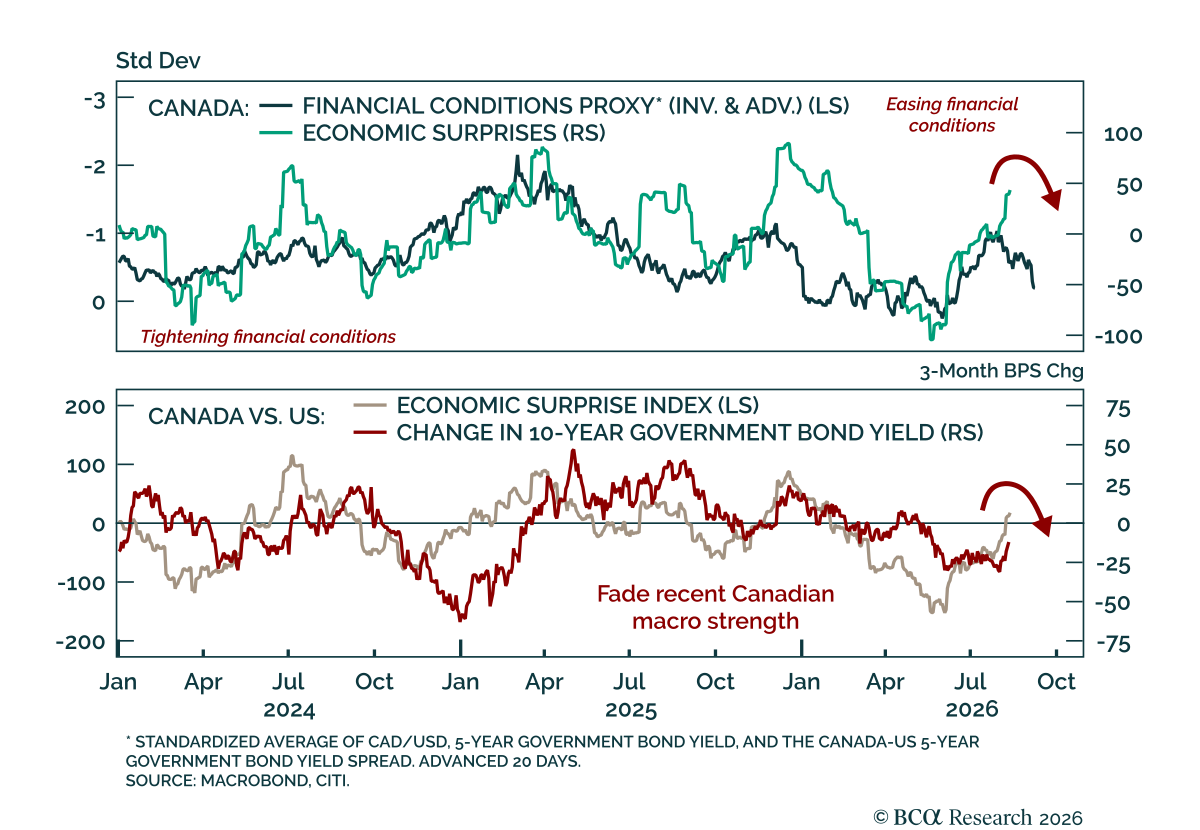
Canada’s recent run of better data is unlikely to last, as leading indicators remain sluggish and financial conditions have tightened. Economic data have outperformed expectations, particularly recent jobs reports. However, Canada exhibits the same broad…
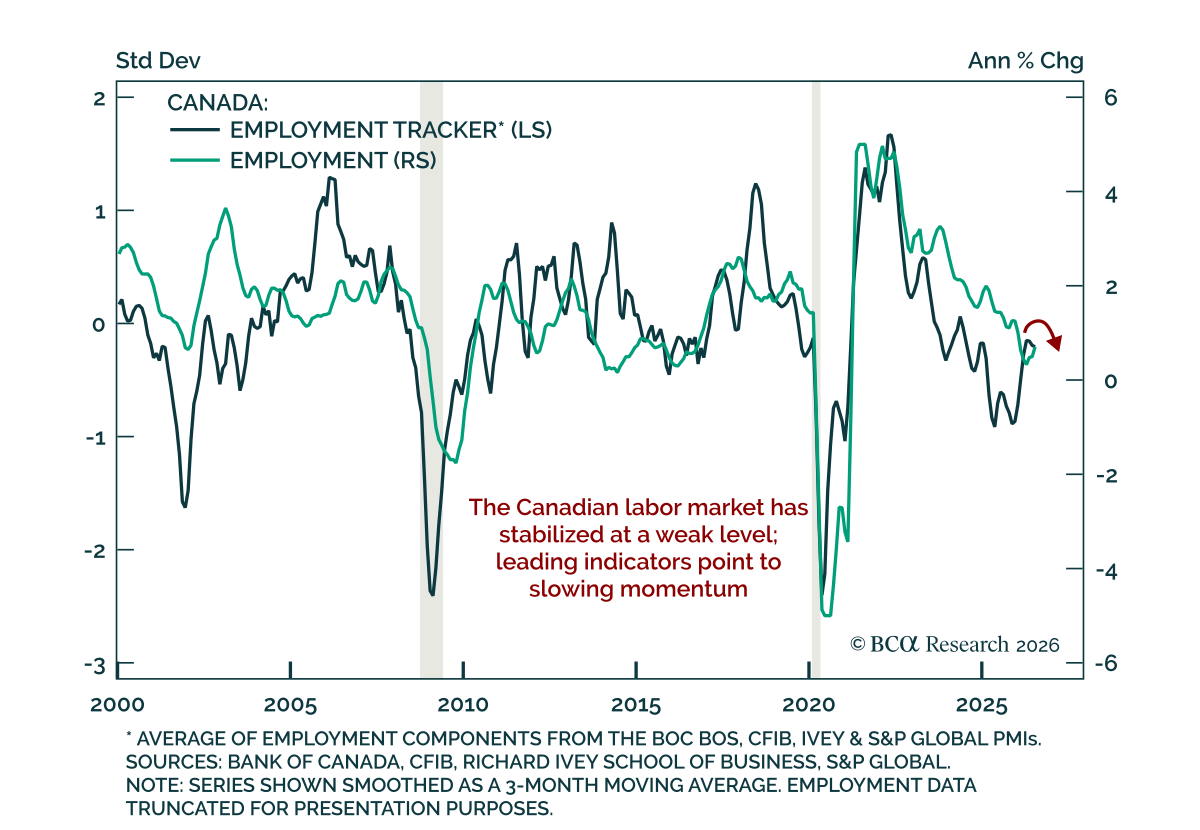
The July Canadian jobs report was strong, but leading indicators still point to a fading labor rebound and limited growth upside. Employment rose by 75.1k, accelerating from 18.2k in June, with gains roughly evenly split between full- and part-time positions.…
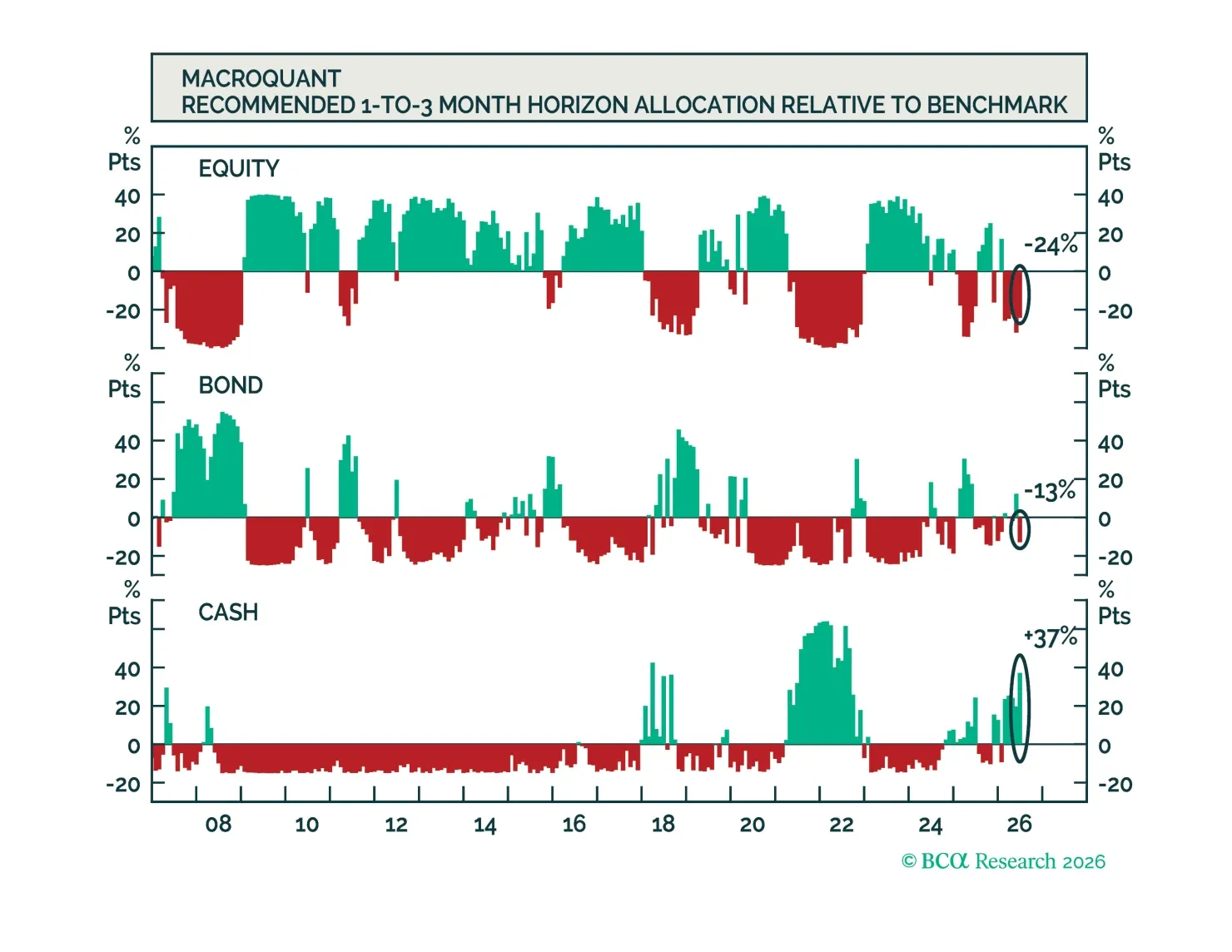
MacroQuant recommends a slight underweight position in equities, and favors a below-benchmark duration stance in fixed-income portfolios. The model is very positive on the US dollar, neutral on gold, constructive on copper, and very bullish on oil.
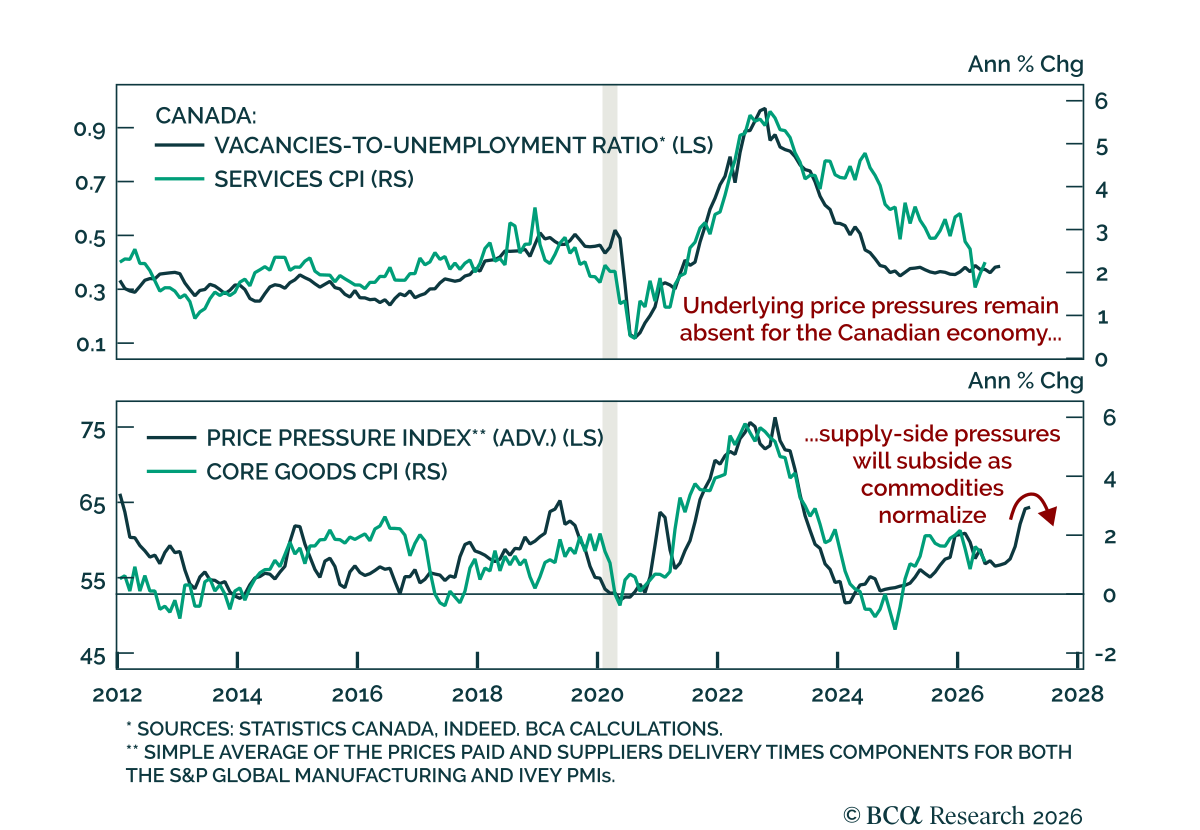
Canadian June inflation came in colder than estimates, reinforcing the case for fading CORRA pricing. Headline CPI ticked down to 2.8% y/y, within the Bank of Canada’s 1%-to-3% target range. The BoC’s preferred core measures also cooled, with median down to…
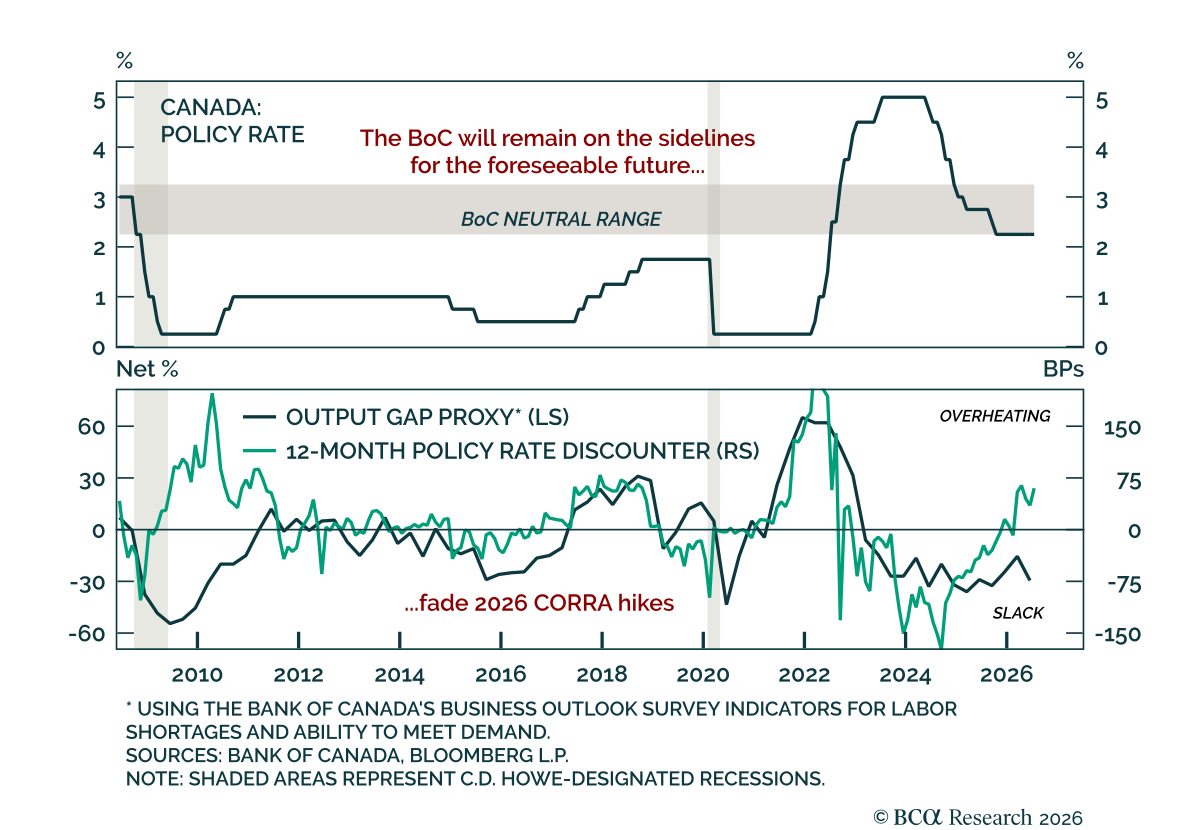
The Bank of Canada held rates, reinforcing its intention to stay on hold in the near term. The BoC kept rates unchanged for a sixth consecutive meeting, as expected. It also removed references to both cuts and hikes from its press release, reinforcing its…
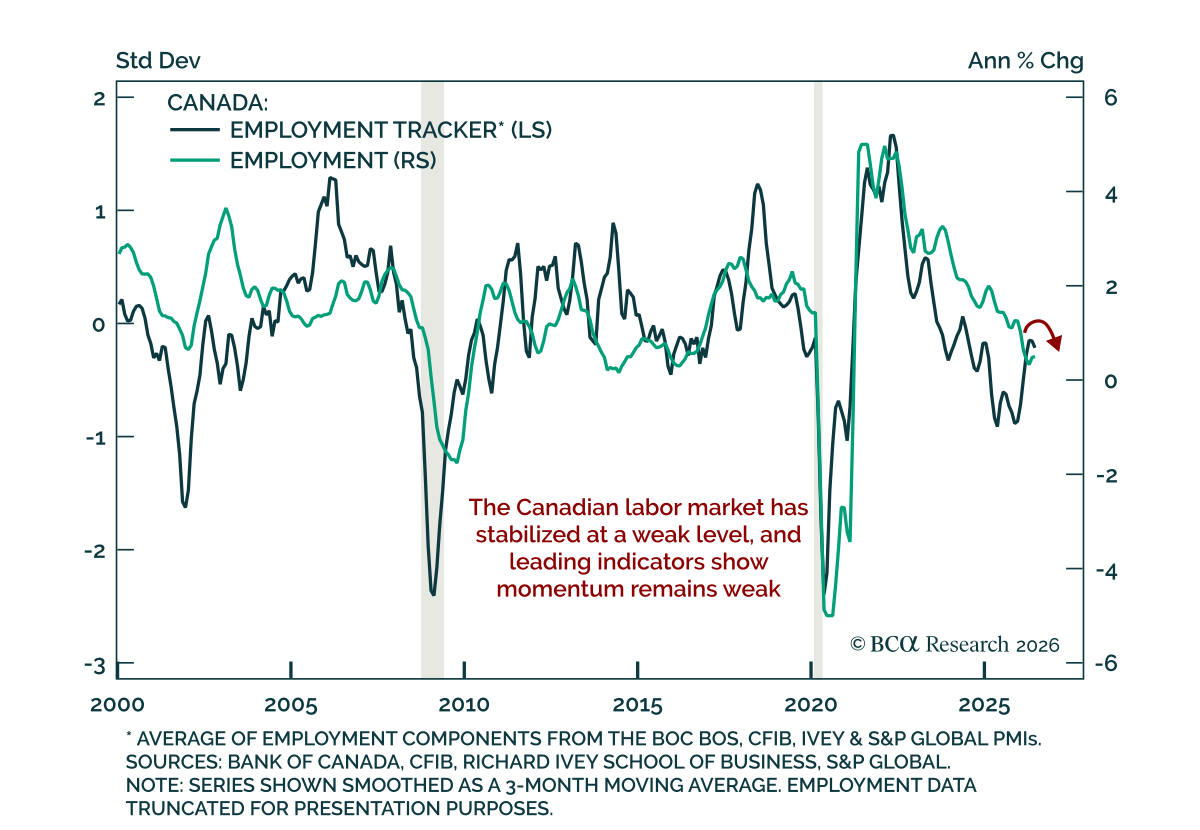
The June Canadian employment report was marginally better than estimates, but the broader labor backdrop remains subdued. Employment rose by 18.2k, slowing from 87.8k in May. Job growth was however concentrated almost entirely in part-time and temporary…