Middle East

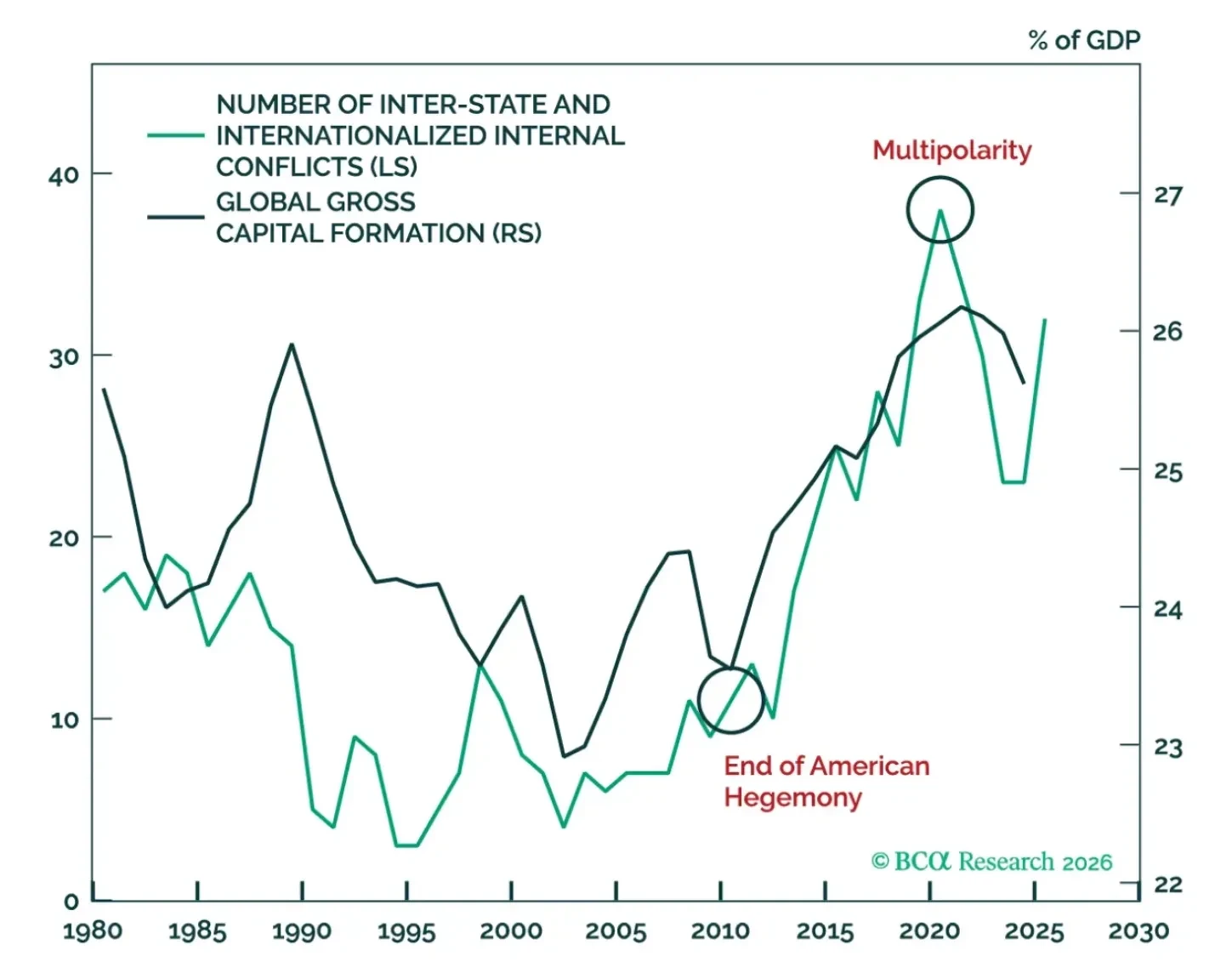
Many clients have asked us for an analysis of the long-term implications of the Hormuz Crisis. In this report, we posit that the conflict has been catalyzed by the multipolar context and that it will merely ossify the trends already afoot. Nothing offers incentives for more global capex like the threat of losing a critical energy supply chain. Therein lies the paradox. While capex is mildly inflationary in the short term, it is wildly disinflationary in the long term. This may be a worthwhile insight given all the consternation about long-dated bonds at the moment.
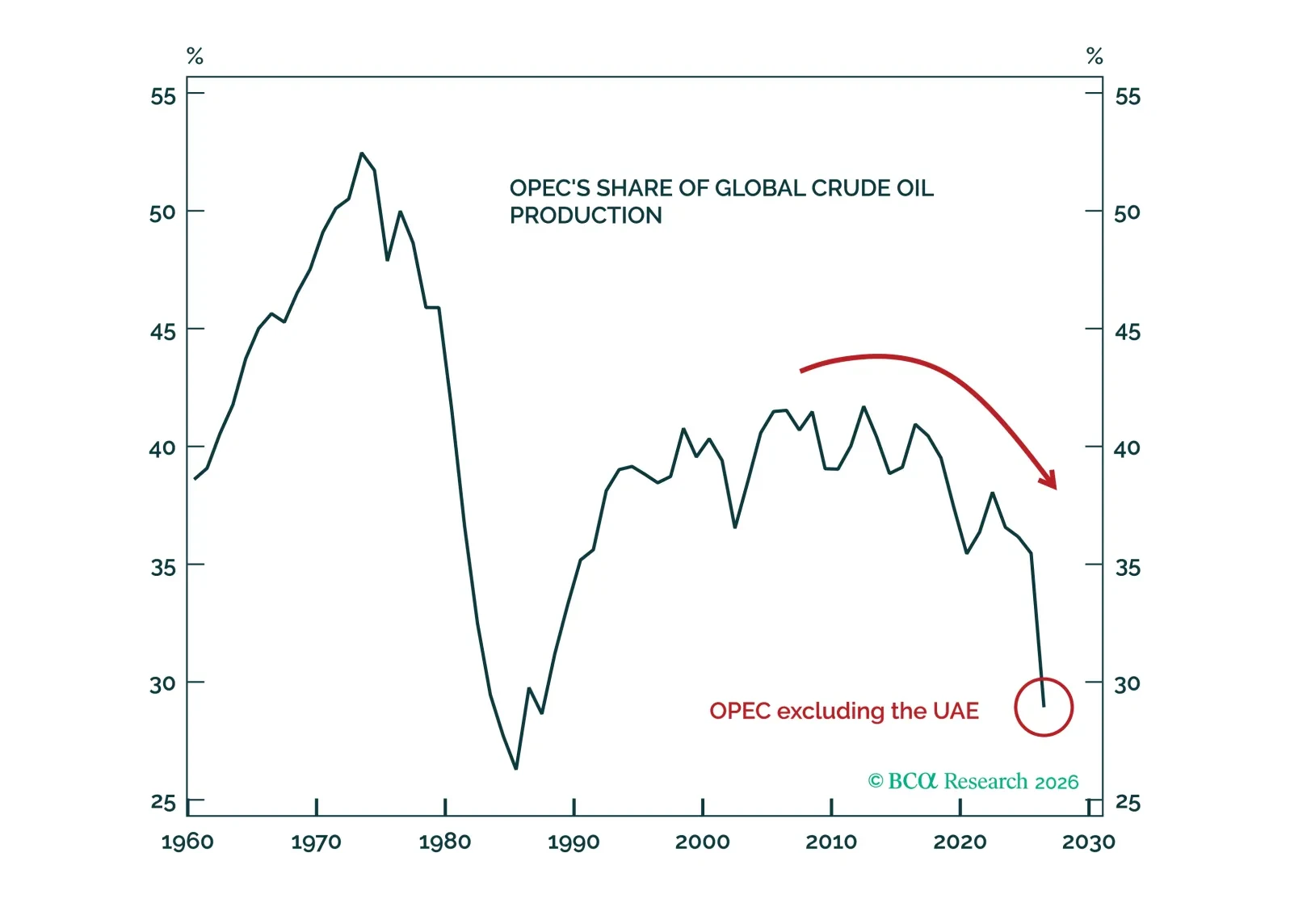
The UAE’s exit from OPEC is unlikely to impact oil markets in 2026. Over the longer term, however, the emergence of an “anti-OPEC club” of producers favoring unconstrained oil output growth would create a headwind to crude prices and weaken the price floor that OPEC seeks to defend.
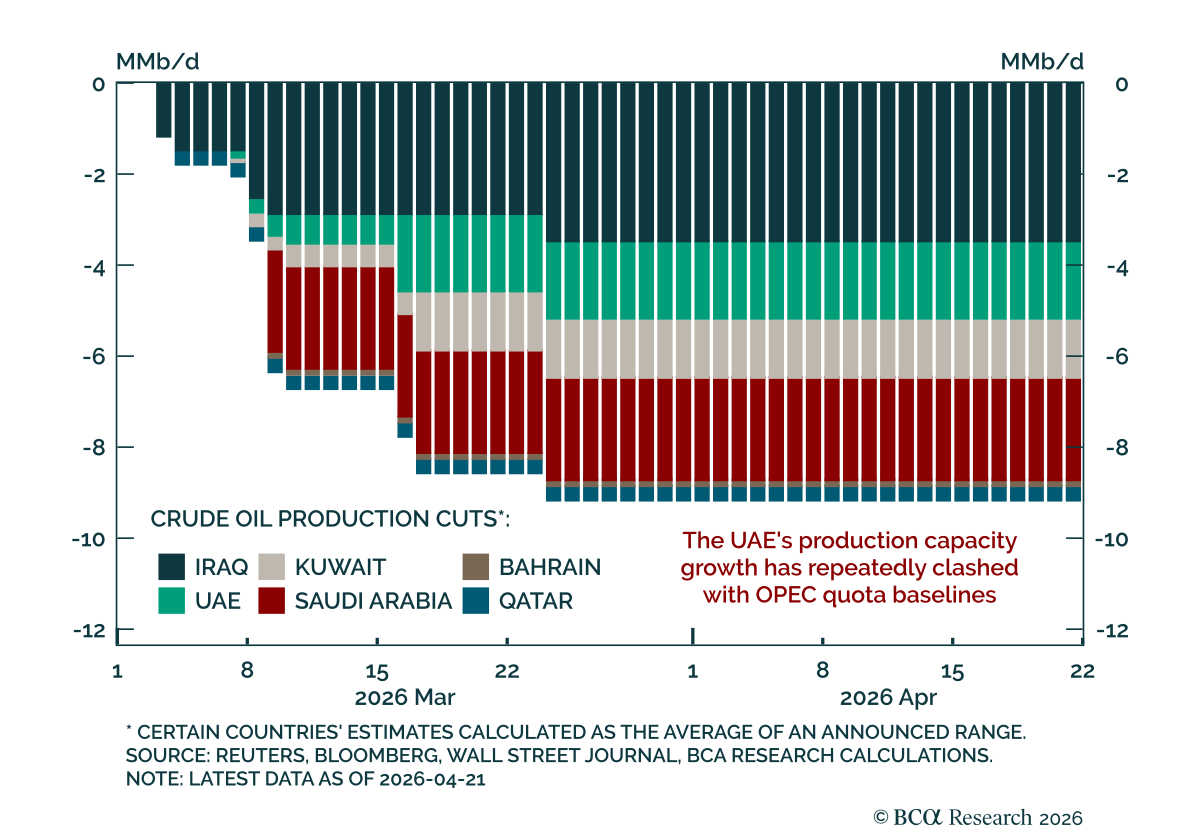
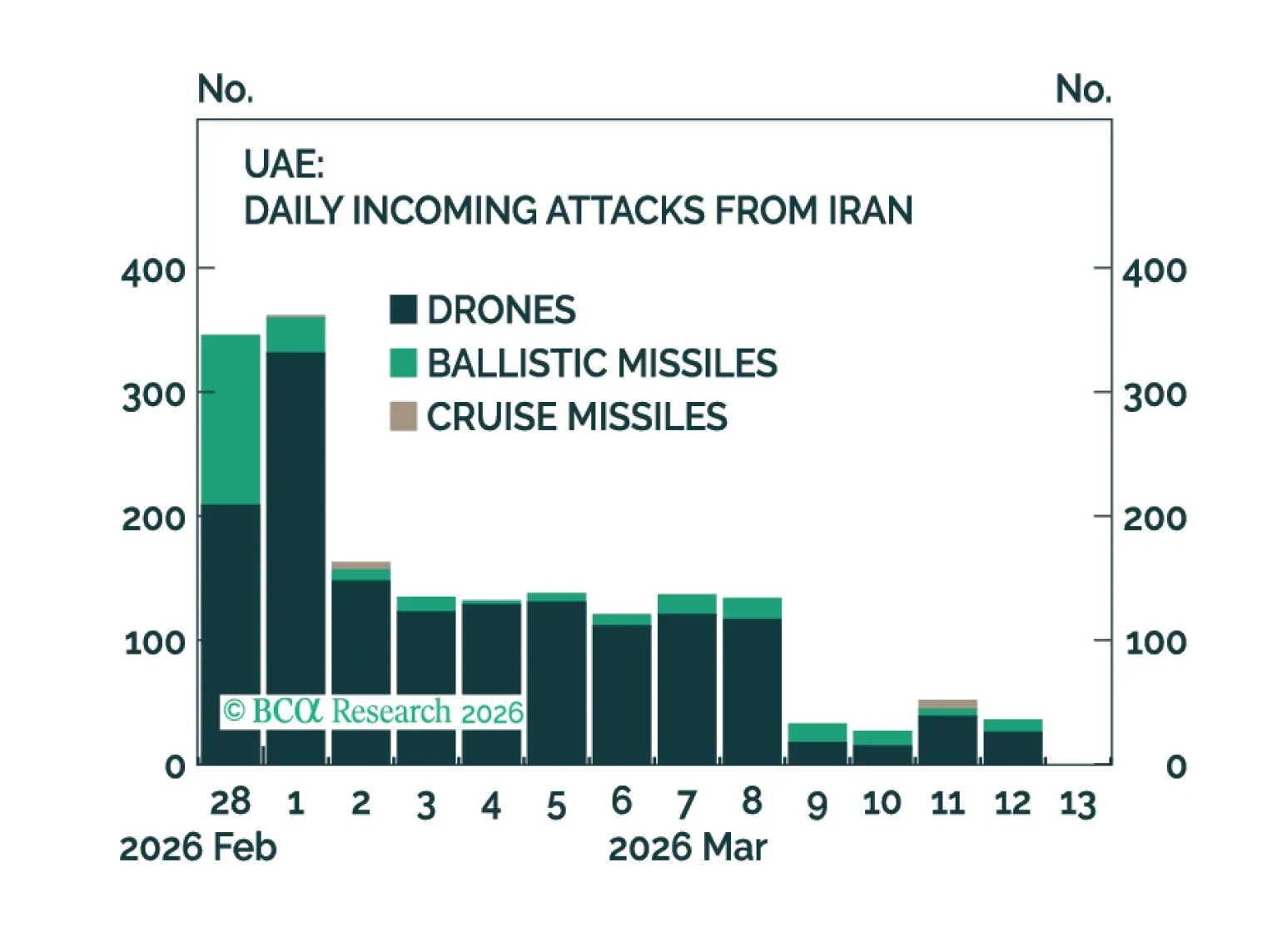
The conflict in the Middle East persists as the US and Israel keep striking at Iranian military and internal security sites, and Iran has responded with its own missiles and drones against the Gulf States. Although the pace of Iranian retaliation has declined, it appears to have stabilized, as evidenced by attacks against the UAE.
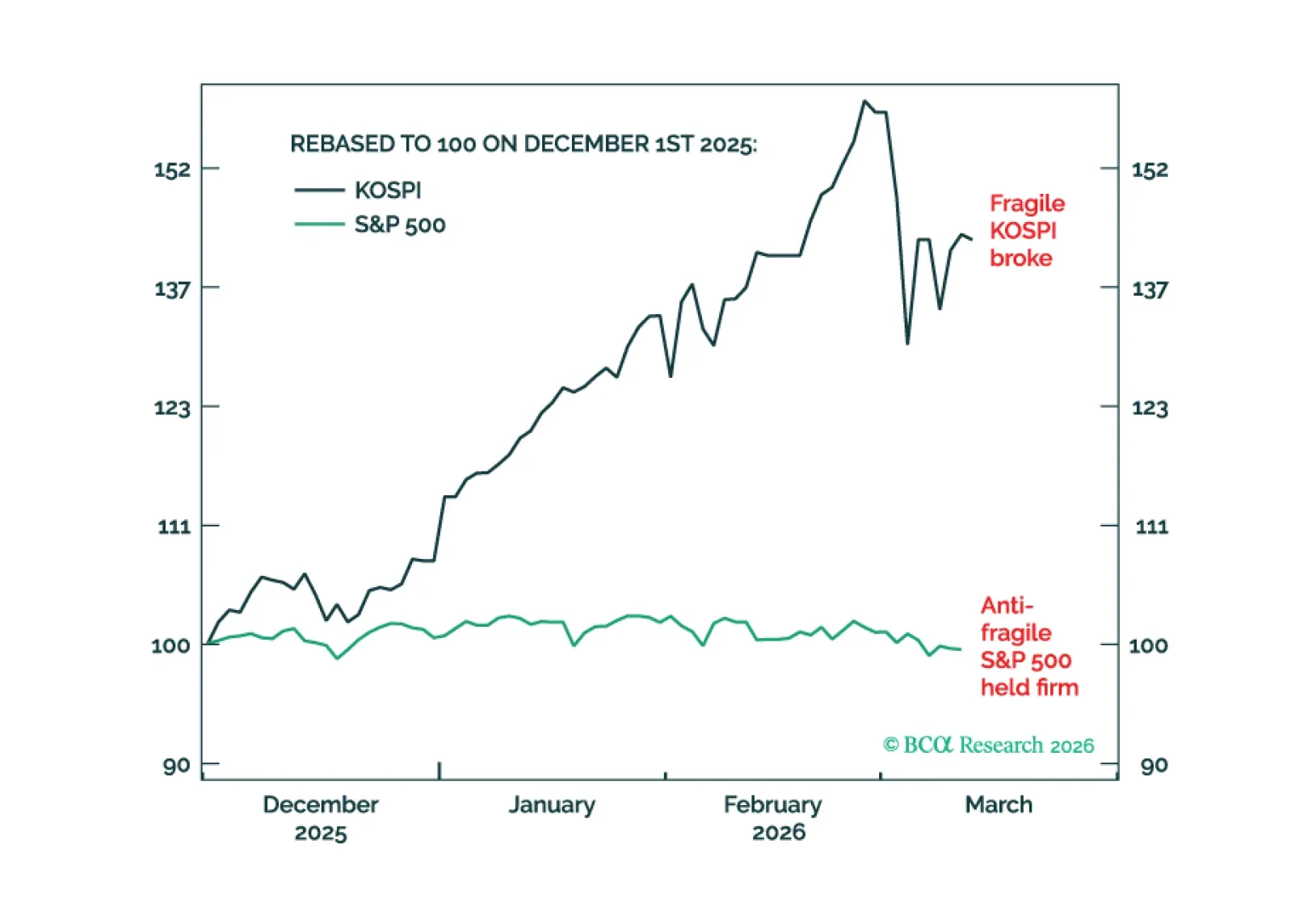
In the ongoing Middle East crisis, anti-fragile markets will remain relatively resilient while fragile markets will break. We describe how to draw the distinction. Plus, a new trade is a 50:50 combination of long USD/MXN and overweight Consumer Discretionary.
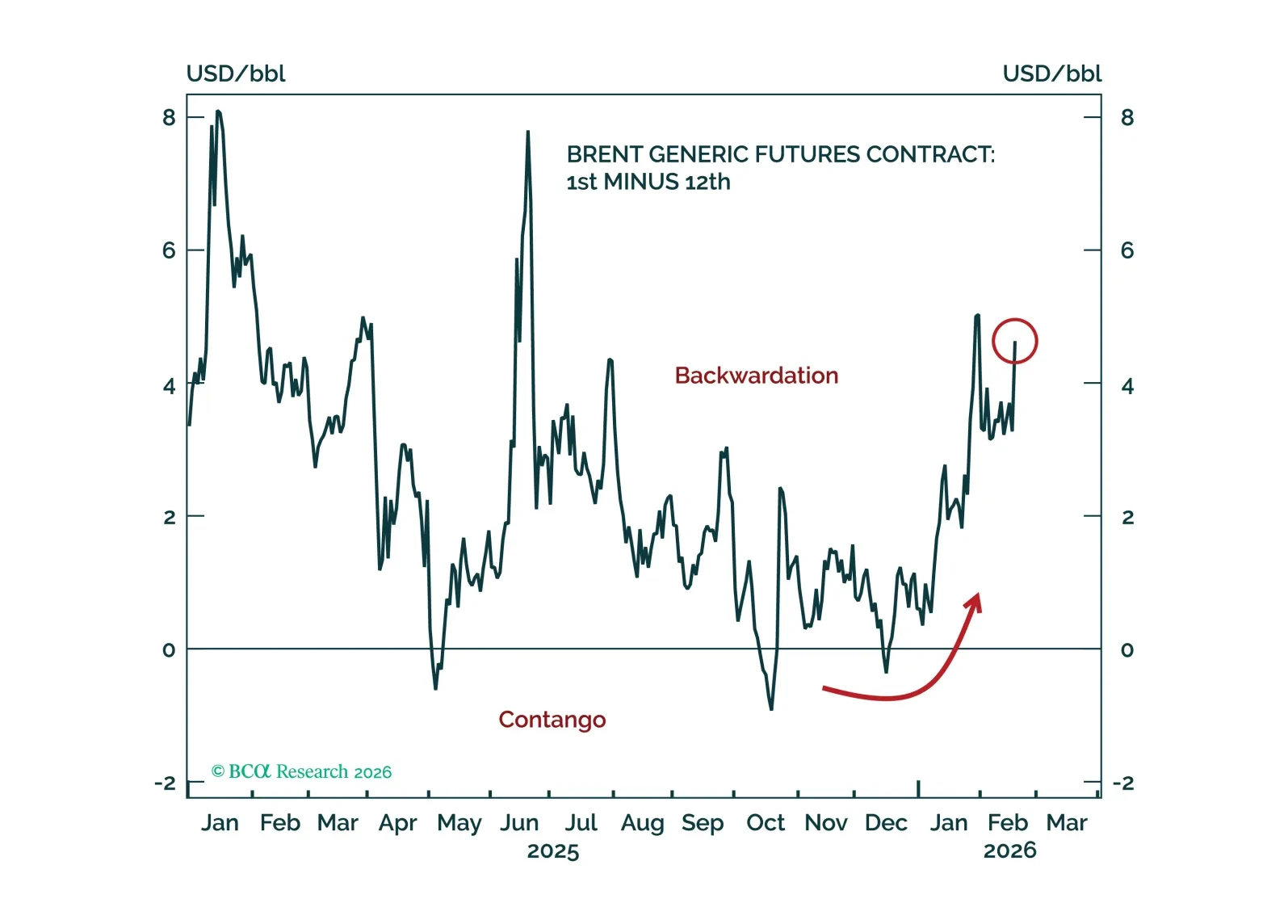
Oil price risks remain skewed to the upside over the near term as geopolitical risks continue to dominate.
Nevertheless, we ultimately expect bearish fundamentals to reassert themselves over a six-to-12-month timeframe and drive oil prices lower.
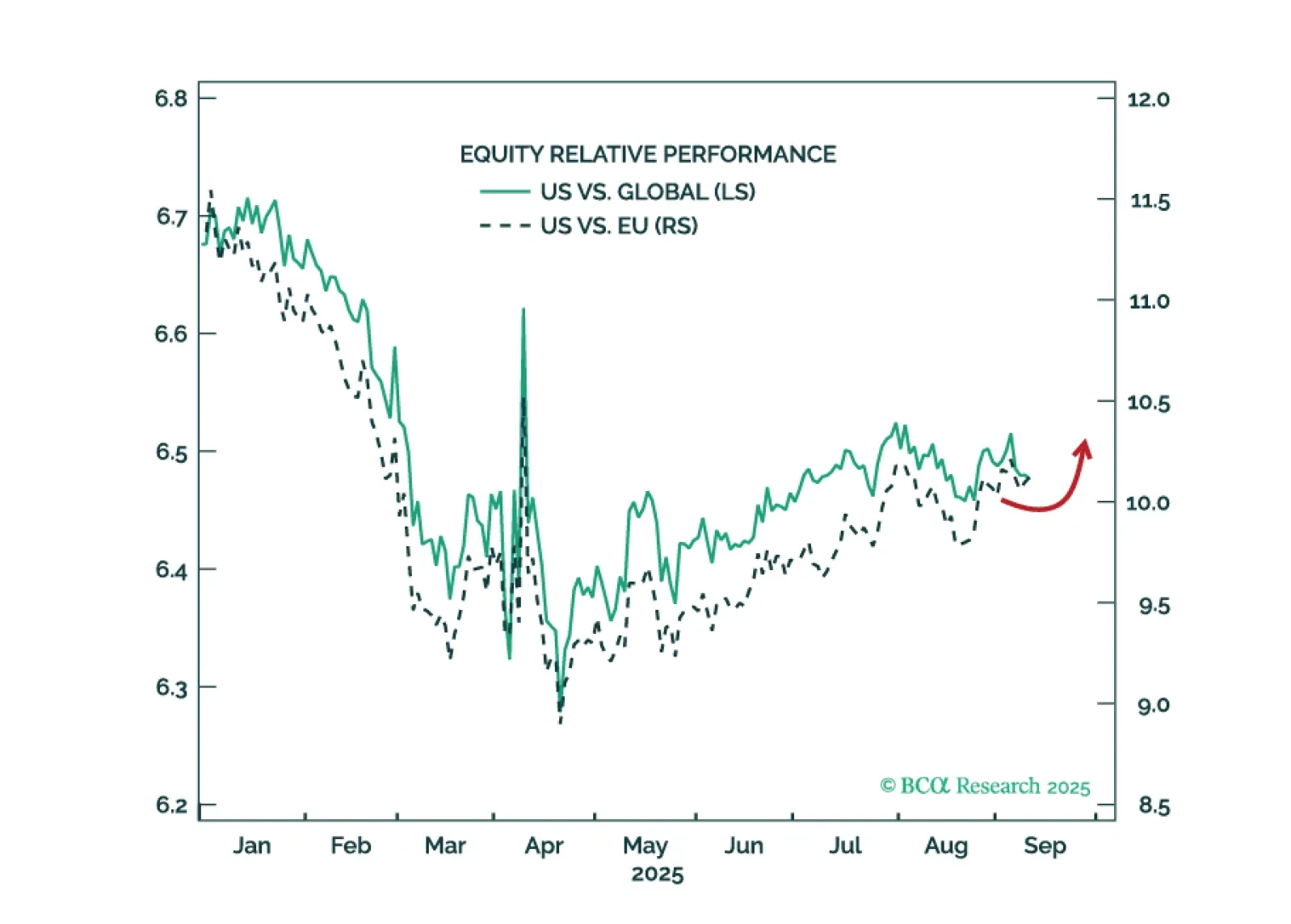
Russia’s recalcitrance will probably trigger a near-term global stock market correction by prompting larger sanctions and derailing US-China talks. But Israel’s actions do not raise our odds of a major oil shock.
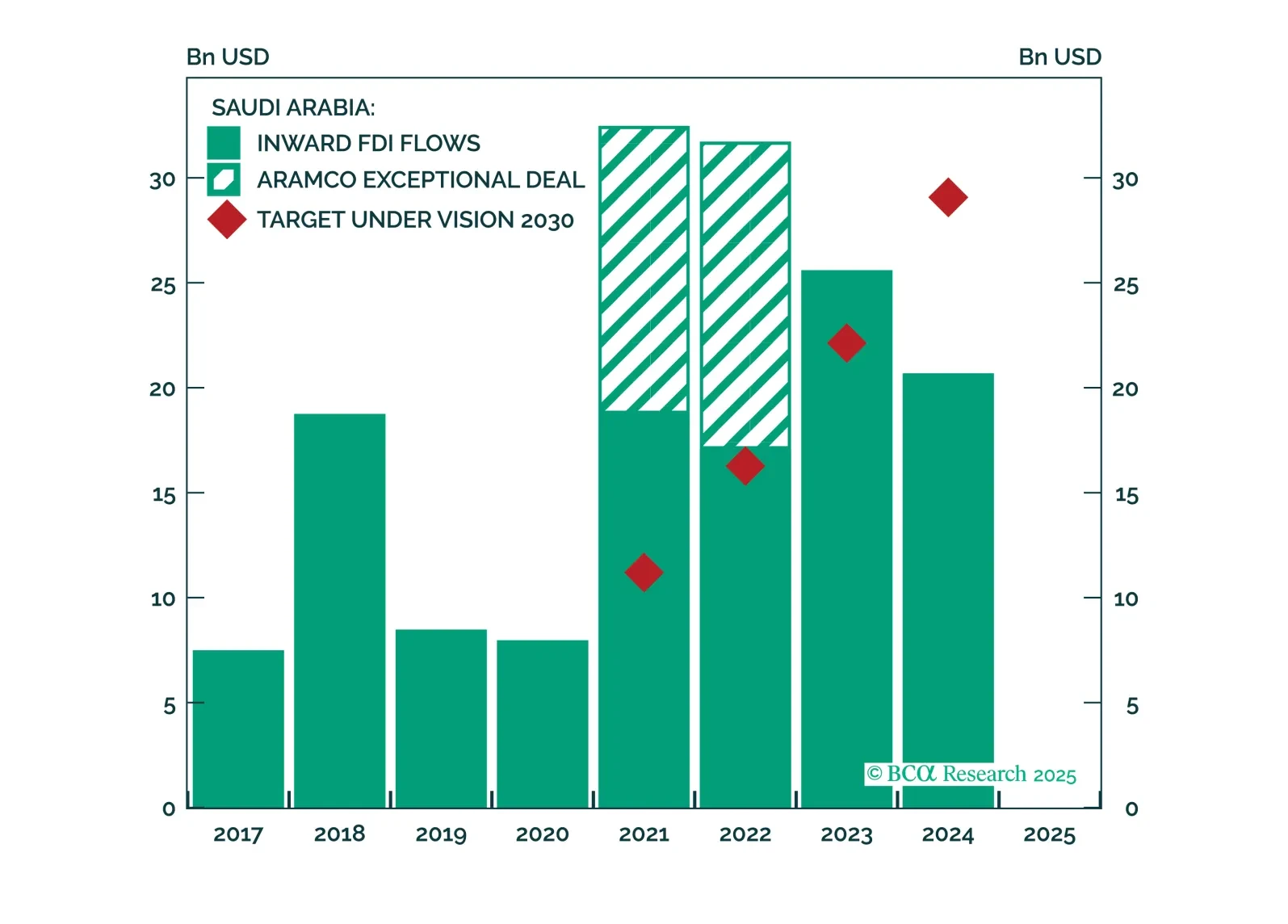
Saudi Arabia’s middling position in our FDI Attractiveness Index reflects closed trade channels and patchy infrastructure that weigh on an otherwise promising investment story. Addressing those gaps could significantly bolster the Kingdom’s appeal as an FDI host.
Acute geopolitical risks, like a massive oil shock, may be abating. But structural geopolitical risk remains high and could upset a blithe market. Cyclical economic risks are underrated as the US slows down and China continues to stumble. Investors should book some profits in anticipation of tariff implementation and a downturn in hard economic data.